Last updated November 18, 2026

Free written scope consultation - allowances, timeline, and change-order rules on paper before a single trade is scheduled
Home Additions & ADU Maintenance Schedule: What to Do and When
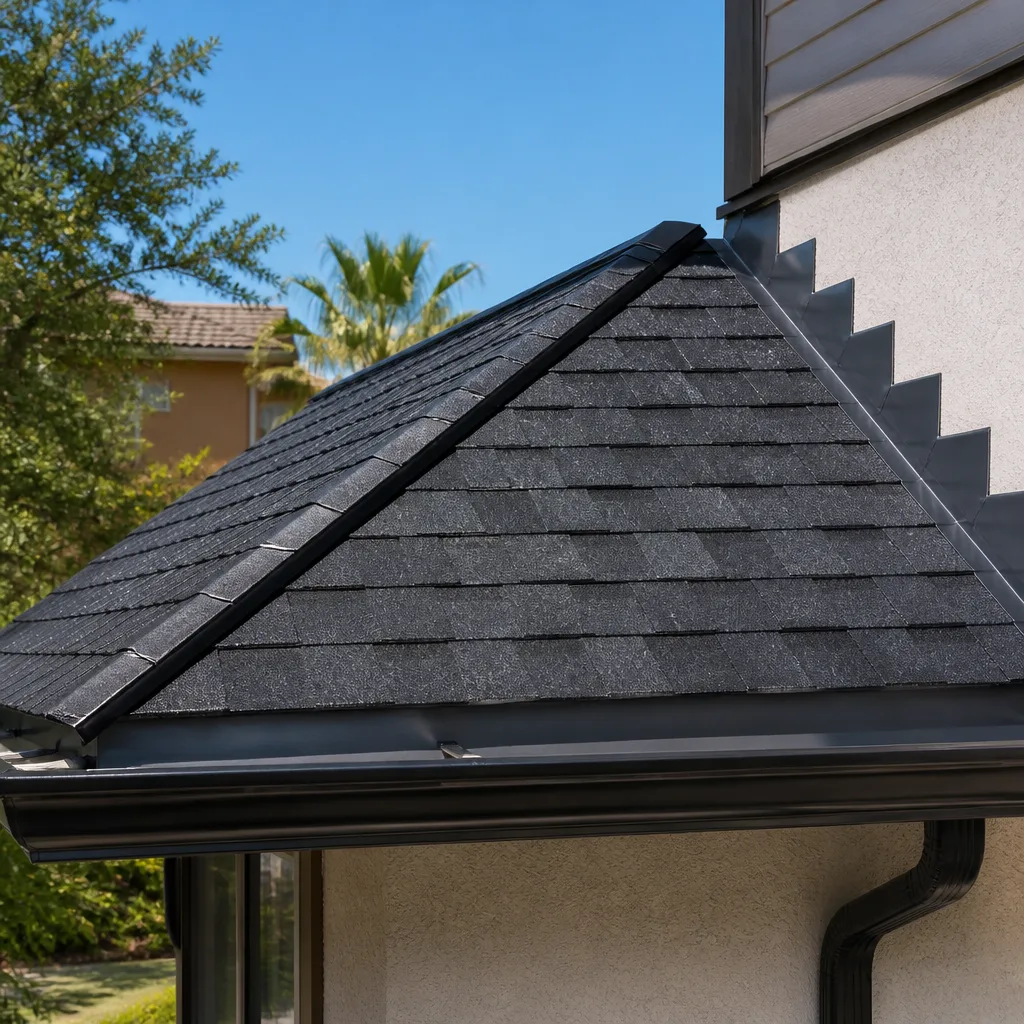
The flashing where a new addition roof meets your original exterior wall is the most neglected maintenance spot on any addition, and most homeowners never put it on a calendar. In Paradise, where summer temperatures push past 115°F and the material on your roof expands and contracts through a swing of more than 80 degrees every year, that junction is also the first thing to fail. An addition or ADU doesn’t age like your original house. It has more seams, more roofline junctions, and more spots where two systems share a connection. This guide gives you a month-by-month schedule built for Paradise conditions, so you know what to check and when.
Quick Answer
A home addition or ADU needs an inspection at every old-to-new seam twice a year, a full exterior caulk and flashing check each spring, and a drainage walkthrough before monsoon season. The first 12 months are a settling window where small cracks and sticky doors are normal. Anything that opens wider after month twelve needs a closer look. Add a five-year milestone list for slab, deck ledger, and roof penetration tasks. If you’d rather have experienced eyes on it, Home Additions & ADU in Paradise covers the build side, and our crew can walk the seams with you.
Styles & brands we work with
- Kitchen remodeling
- Bathroom remodeling
- Home additions & ADU
- Roofing
- Windows & doors
- Driveway & pavers
- Fence
Table of Contents
- Why Additions Age Differently Than Your Original Home
- The Settling Window: What’s Normal in the First 12 Months
- Your Month-by-Month Maintenance Calendar
- Seam Maintenance: Caulk, Expansion Joints, and Flashing
- Your ADU’s Separate Utility Panel and Sub-Meter
- The Five-Year Milestone Checklist
- Drainage and Flash Flood Season Prep
- Common Mistakes to Avoid
- When to Call a Professional
- Frequently Asked Questions
Why Additions Age Differently Than Your Original Home
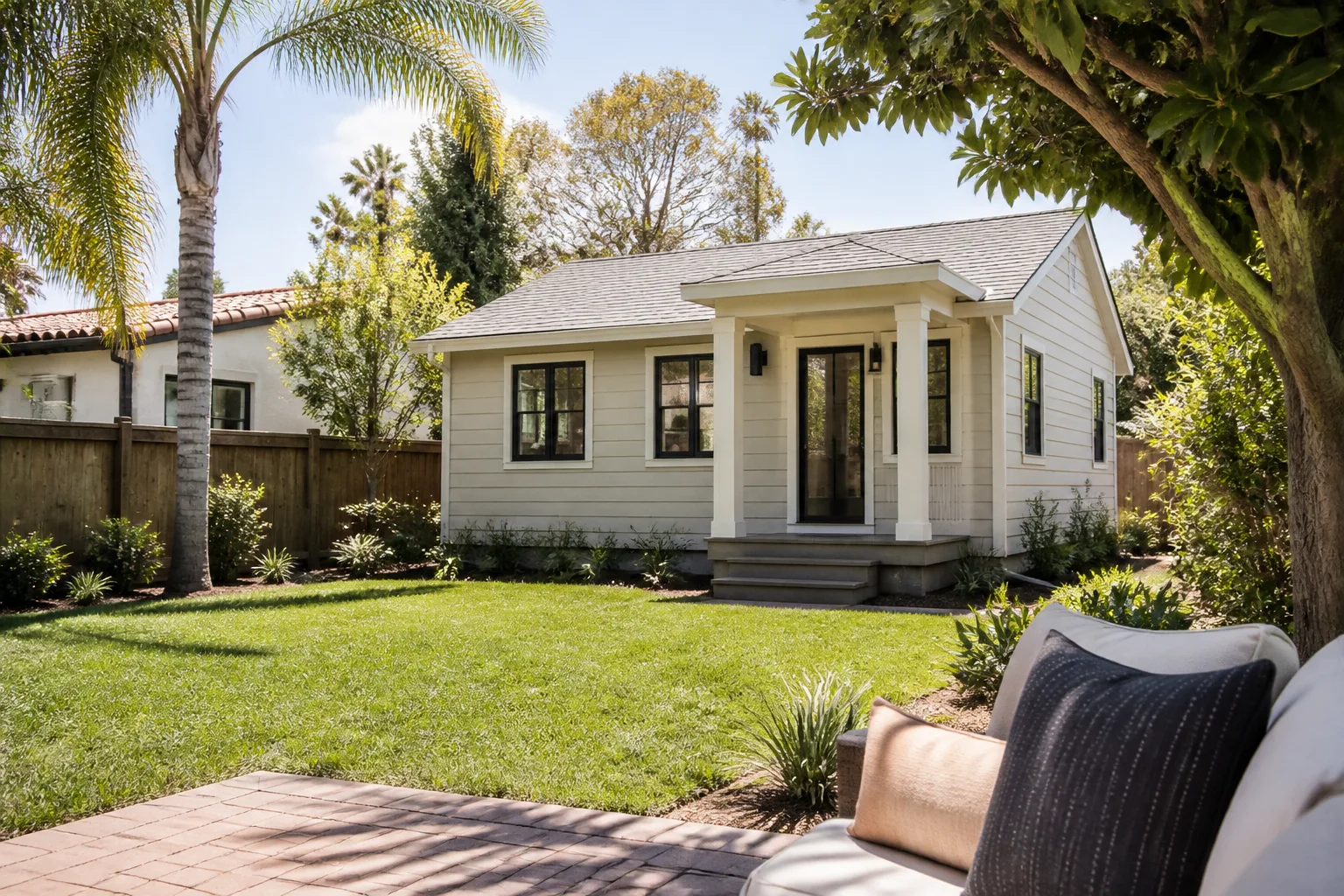
Your original home was built as one piece. An addition is a marriage of two structures built years apart, sometimes decades apart, and the seam between them behaves like a joint in your knee. Each side moves at its own rate, and the material bridging the gap has to absorb the difference. That’s true everywhere. In Paradise it’s exaggerated because the thermal swing is so wide. A roofline junction that gets 200 cycles of expansion in a temperate climate gets 300 or more here, and the sealant in between takes the wear.
We also see moisture behave differently on additions. The original home has had years to settle into its drainage pattern. The new roof plane and new gutters may dump water somewhere the old landscaping never expected. When we build in Paradise, we plan the drainage on paper first. Maintenance is where that plan either holds up or gets discovered the hard way.
The other reason additions age on their own clock is that many of them carry a separate utility feed. If you built a legal ADU, it likely has its own sub-panel, its own meter or sub-meter, and its own shutoffs. That’s a system, and systems need service. It’s easy to forget because it lives on the same property as the house you already know.
What this means for you: treat the addition as its own building that happens to share a wall with the one you sleep in. Give it its own checklist. That single shift in thinking prevents most of the expensive repairs we get called out to fix.
The Settling Window: What’s Normal in the First 12 Months
New construction moves. Framing dries, lumber shrinks, concrete cures, and the whole assembly finds its resting place over the first year. Some of what you see during that stretch is normal and needs no action. Some of it is a warning.
Normal in year one
- Hairline cracks at drywall seams, especially where the new wall meets the old ceiling.
- Doors that stick in July and free up in November. That’s humidity and heat, not structure.
- Small grout gaps at tile edges, particularly at inside corners.
- Trim separating a hair from the wall where two different materials meet.
- A single hairline crack in the slab if it’s an attached addition, as long as the two sides stay level.
Worth a call in year one
- A crack that keeps widening month over month. Photograph it with a coin alongside for scale.
- Doors or windows that stick all year, in every season.
- Water staining on the ceiling below a roofline junction.
- Grout lines that crack and crumble rather than just gap.
- Any crack wider than a nickel, or a crack in a stair-step pattern on block or brick.
After month twelve, the rules change. The building should be settled. A new crack after that point, especially one that reappears in the same spot after patching, tells you something is still moving and deserves eyes on it. In Paradise we’ve seen doors start sticking in year three because the addition slab edge was never re-inspected after the first summer. Catching that early is a weekend of work. Catching it late is a bigger number.
Your Month-by-Month Maintenance Calendar
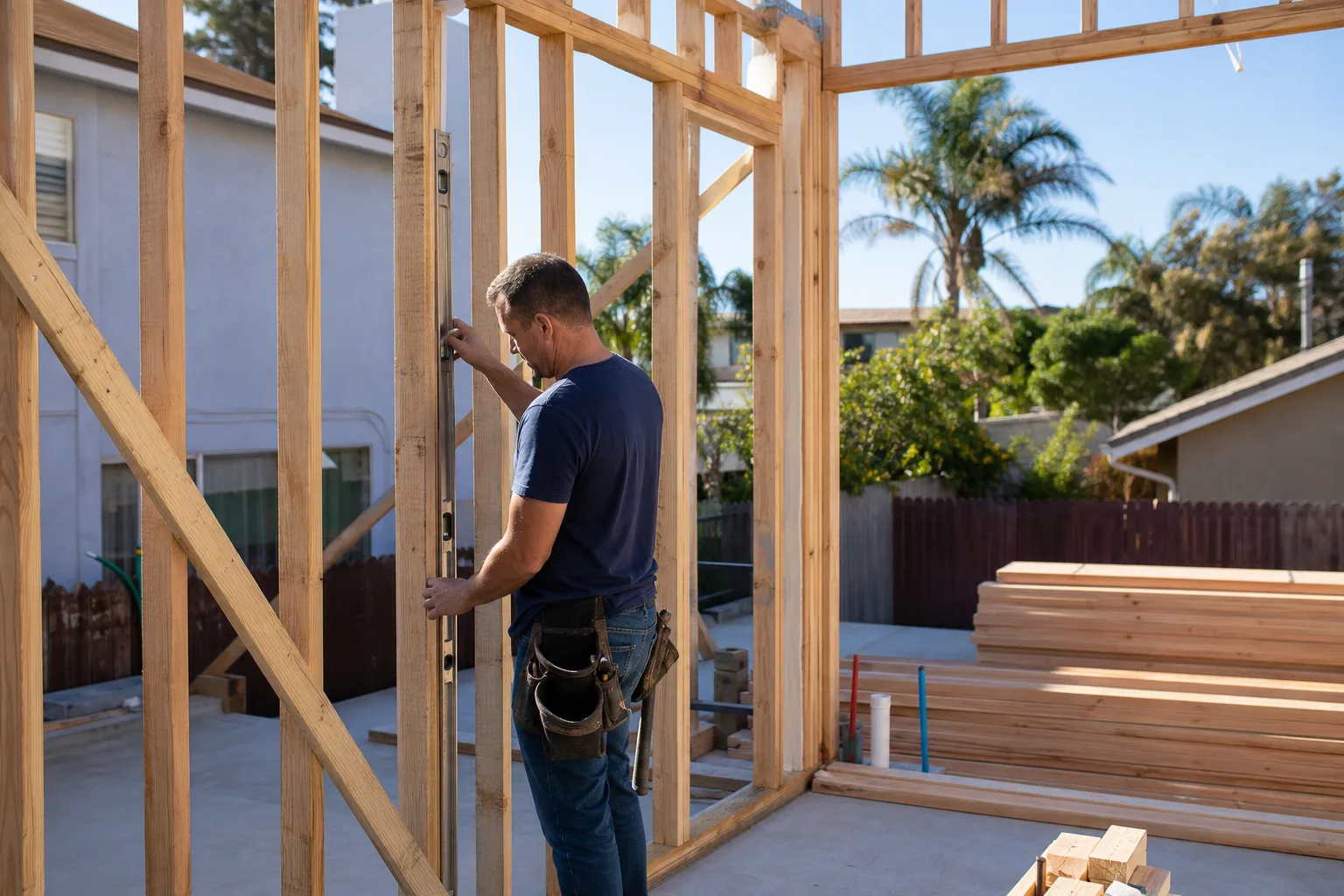
This calendar is tuned to Paradise weather patterns, not a generic national schedule. Print it, hang it in the garage, and write dates on it. That’s the whole habit.
- January: Walk interior ceilings below all roofline junctions. Look for water rings from winter rain. Check for caulk shrinkage at seams.
- February: Inspect the ADU utility panel. Trip each breaker once and reset. Clear anything stored against the panel.
- March: Full exterior caulk inspection at every old-to-new seam. Test a small section with a fingernail. If it peels, it’s time.
- April: Clean gutters. Check downspouts run water away from the addition foundation, not into it.
- May: Check the flashing at the addition roof to existing wall junction. Look for lifted edges, rust, or missing fasteners.
- June: Test the ADU smoke and CO detectors. Check the sub-meter reading against your records.
- July: Photograph the interior at your known settling spots. The 115°F peak is when the building is under the most stress.
- August: Second caulk and expansion joint check. The heat can open a seam you sealed in spring.
- September: Pre-monsoon drainage walkthrough. Clear debris from swales and check grading slopes away from all additions.
- October: Roof inspection on the addition. Watch for lifted shingles at the junction where two roof planes meet.
- November: Clear roof valleys and check for leaf buildup before the wet season.
- December: Interior walk for cracks and doors. Schedule anything that needs professional attention for after the holidays.
One thing worth knowing about a Paradise winter: it’s the low humidity that does the caulk. Sealant that looked flexible in July can go brittle and crack by December as the air dries out. That’s why we check twice, spring and fall, instead of once.
Seam Maintenance: Caulk, Expansion Joints, and Flashing
Every addition has joints. Exterior caulk lines, expansion joints at slabs and pavers, sealant at trim transitions, and flashing at rooflines. These are the parts of a build most likely to need service first, and the parts most homeowners don’t know how to read. Here’s what failure looks like in desert conditions versus what you’d see in a wet climate.
What failed caulk looks like in Paradise
- Caulk that looks intact but peels away in strips when you press it. In a temperate climate you’d see mold or dark staining first. Here it fails dry and quiet.
- Visible separation at the joint, often a hairline gap that a dime could fit into.
- Chalking on the surface: it looks white and powdery before it starts cracking.
- Old caulk pulling away clean from one side of the joint. That means adhesion failed on that side, not the sealant itself.
When you find a failing joint, the fix is not a fresh bead over the top. It’s dig it out, clean both sides dry, and re-seal with the right material for the joint width. The expansion joints at pavers and hardscape need a backer rod and a proper sealant designed to flex, not a tube of bath caulk. If you’re already working on the ground around the addition, Driveway & Pavers in Paradise explains how paver expansion joints are meant to be sealed.
Flashing at roofline junctions
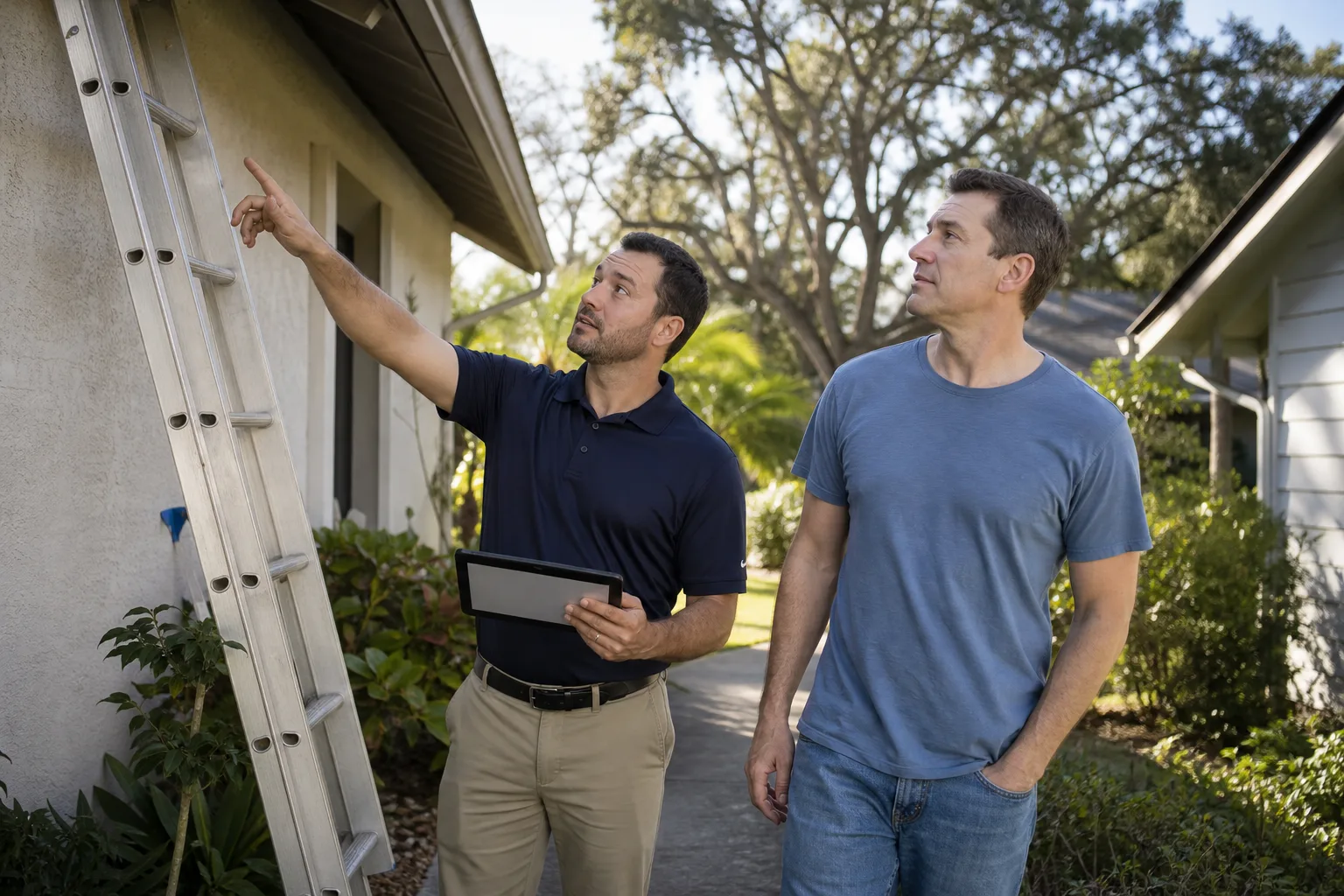
The flashing where a new roof meets an existing wall is the spot to watch. In our experience in Paradise, if a homeowner tracks one thing on the exterior, it should be this. What to look for: lifted edges, missing fasteners, rust, or a bead of sealant over the flashing that has shrunk and separated. Don’t climb the roof if it’s steeper than you’re comfortable on. Binoculars from the ground work fine for the annual check, and a pro should be the one on the roof for anything you can’t see clearly.
Your ADU’s Separate Utility Panel and Sub-Meter
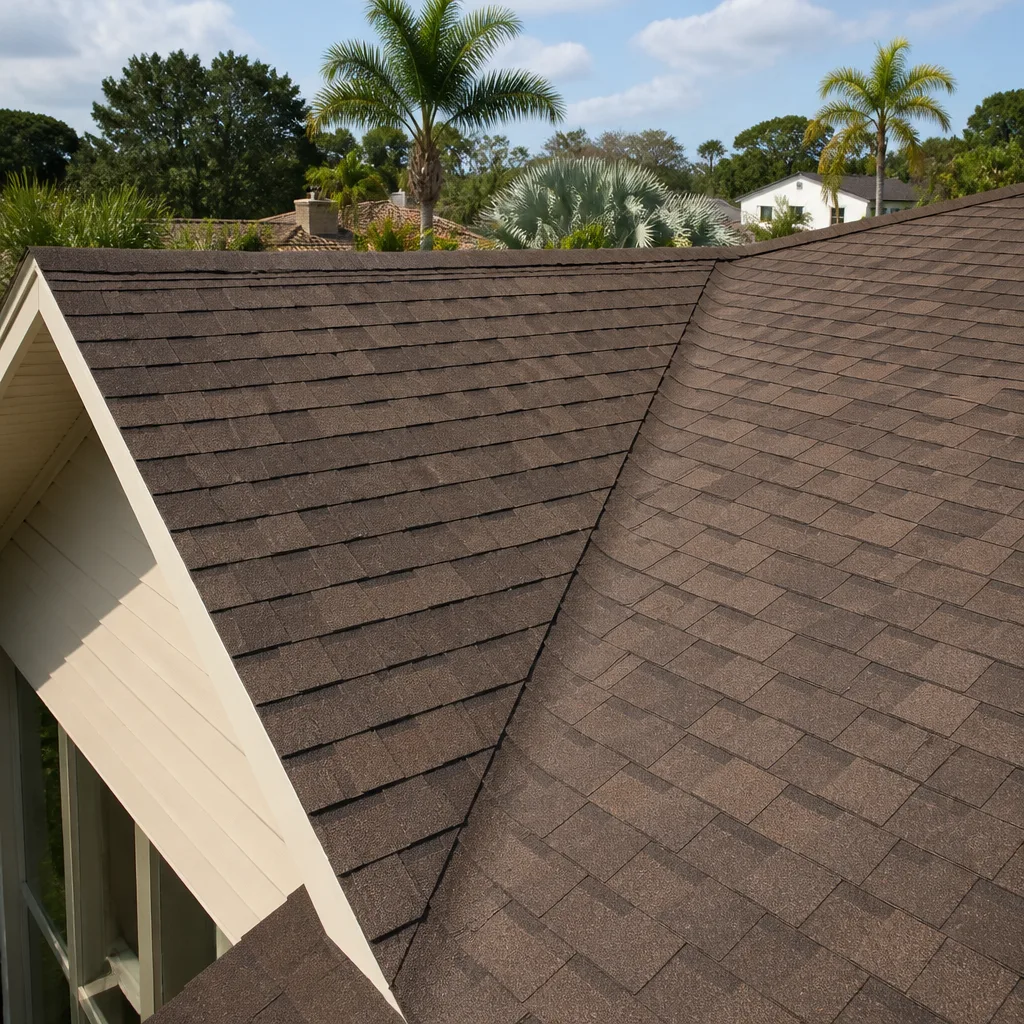
A well-built ADU has its own disconnect panel and often its own meter or sub-meter. That’s not a complication, it’s a feature, because it lets you track what the ADU uses and shut off power to it in one place. But it also means you have a second power system to maintain.
- Label it. Every breaker gets a written label inside the panel door. Future you, or a future electrician, will thank present you.
- Trip and reset each breaker once a year. In February, do the rounds. Breakers can freeze up from disuse.
- Keep the panel clear. Thirty-six inches of clear space in front is the standard, and it matters when someone needs to kill power fast.
- Read the sub-meter monthly. A sudden jump with no change in use suggests something is running when it shouldn’t be.
- Check the disconnect. For a detached ADU there should be a disconnect at the structure. Verify it operates.
- Never open the panel yourself. Panel interiors carry live voltage. Label work, breaker trips, and clear space you can do. Anything inside the dead front is a job for a licensed electrician.
Same rule for the ADU’s plumbing shutoffs. They should be labeled and tested annually. A shutoff that’s seized in year four is useless during a leak.
See the difference
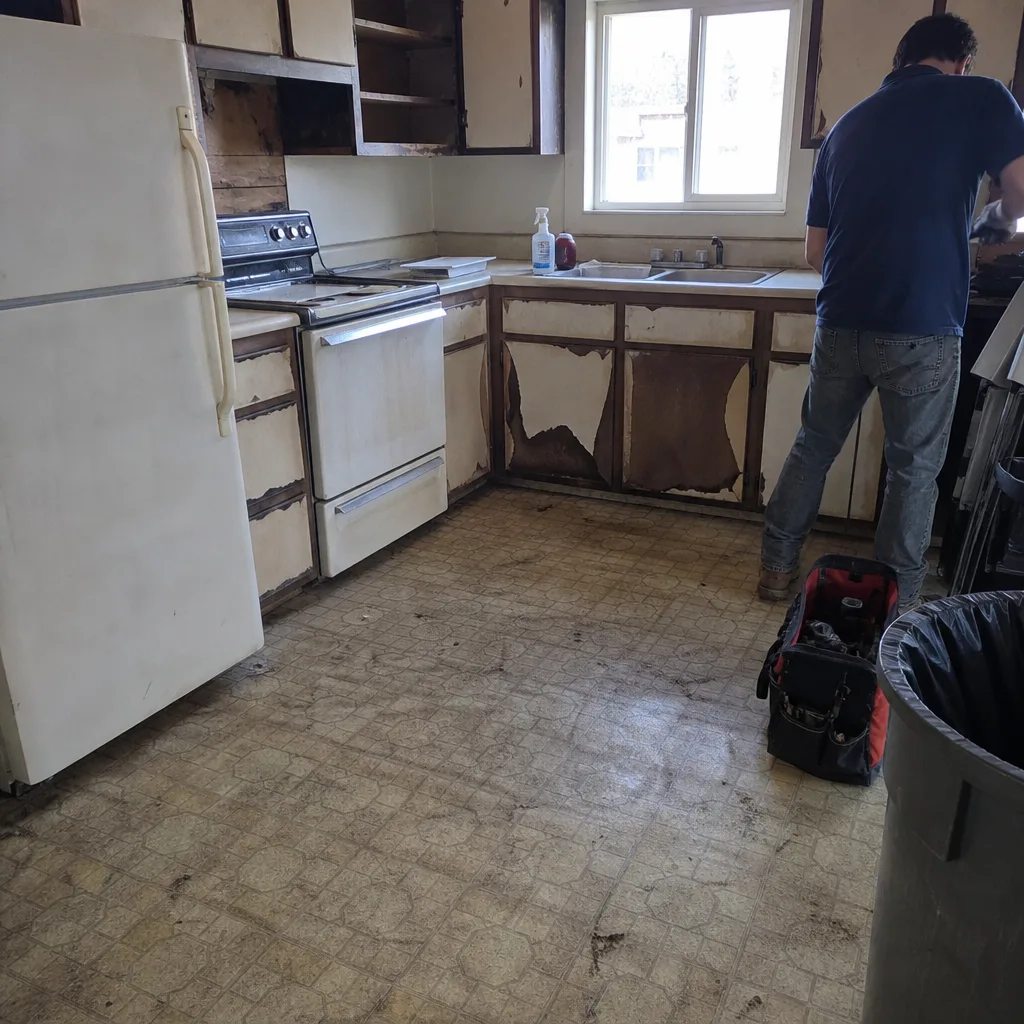 Before
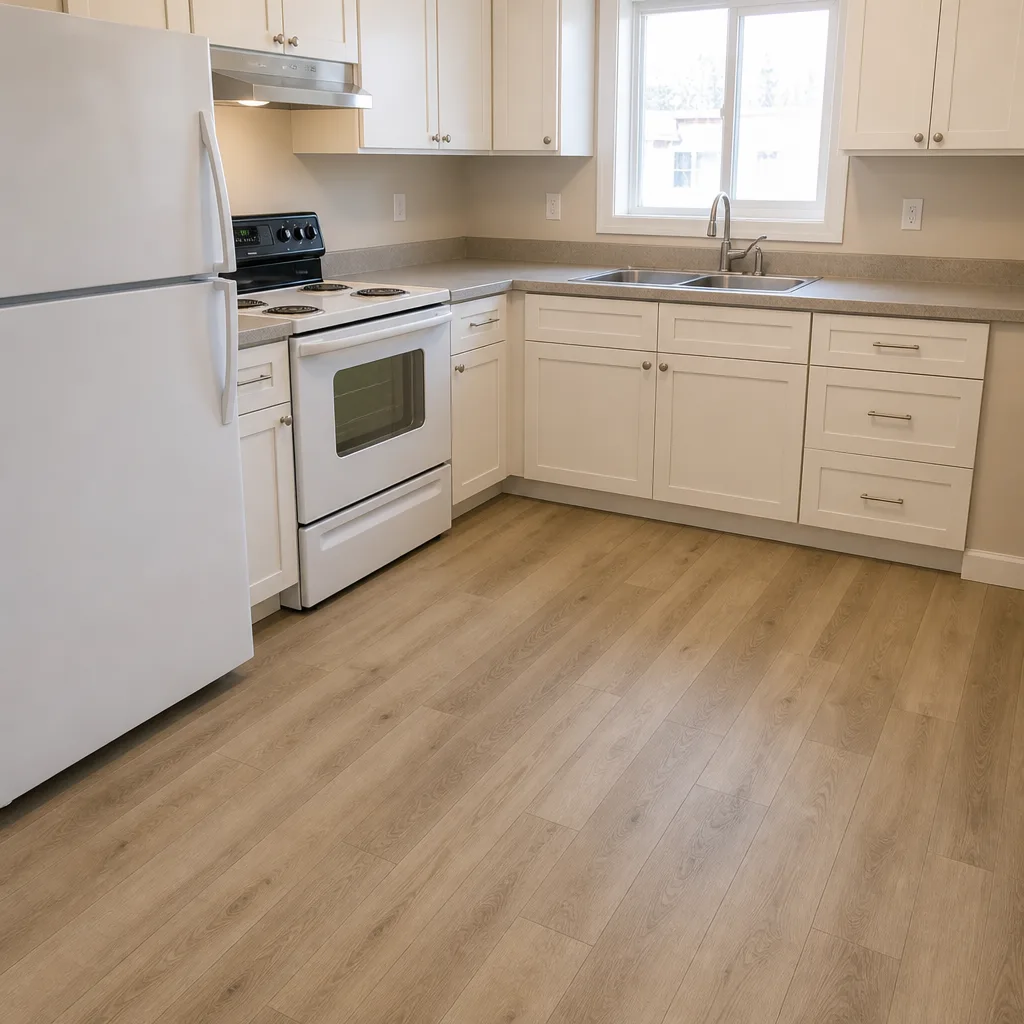 After
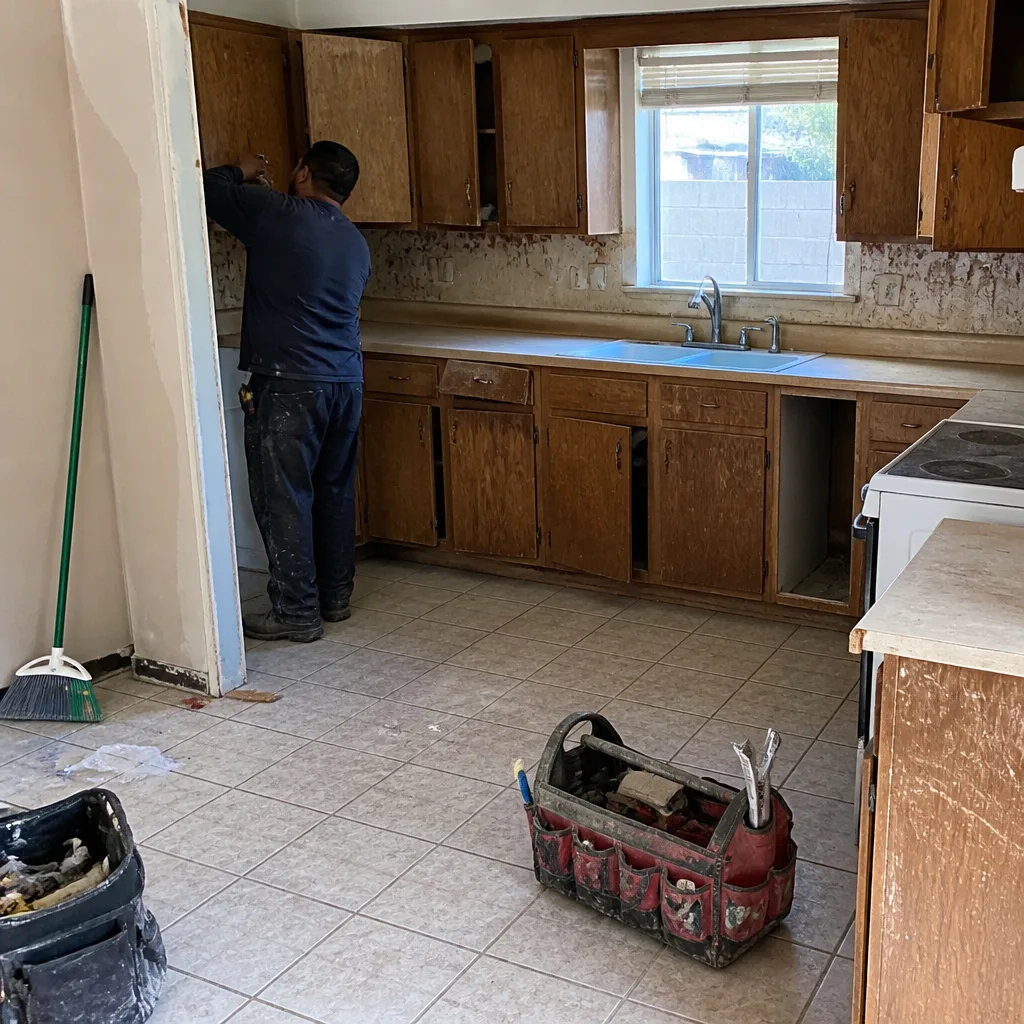 Before
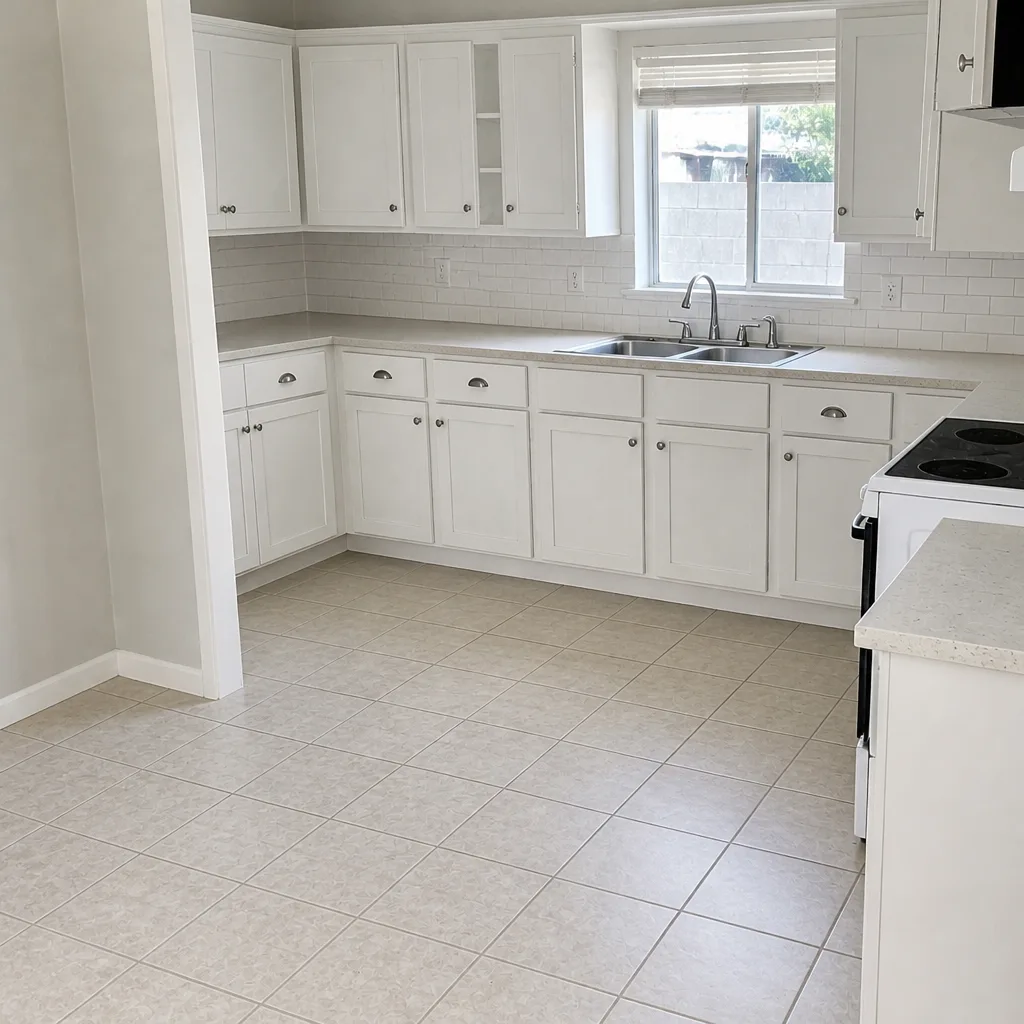 After
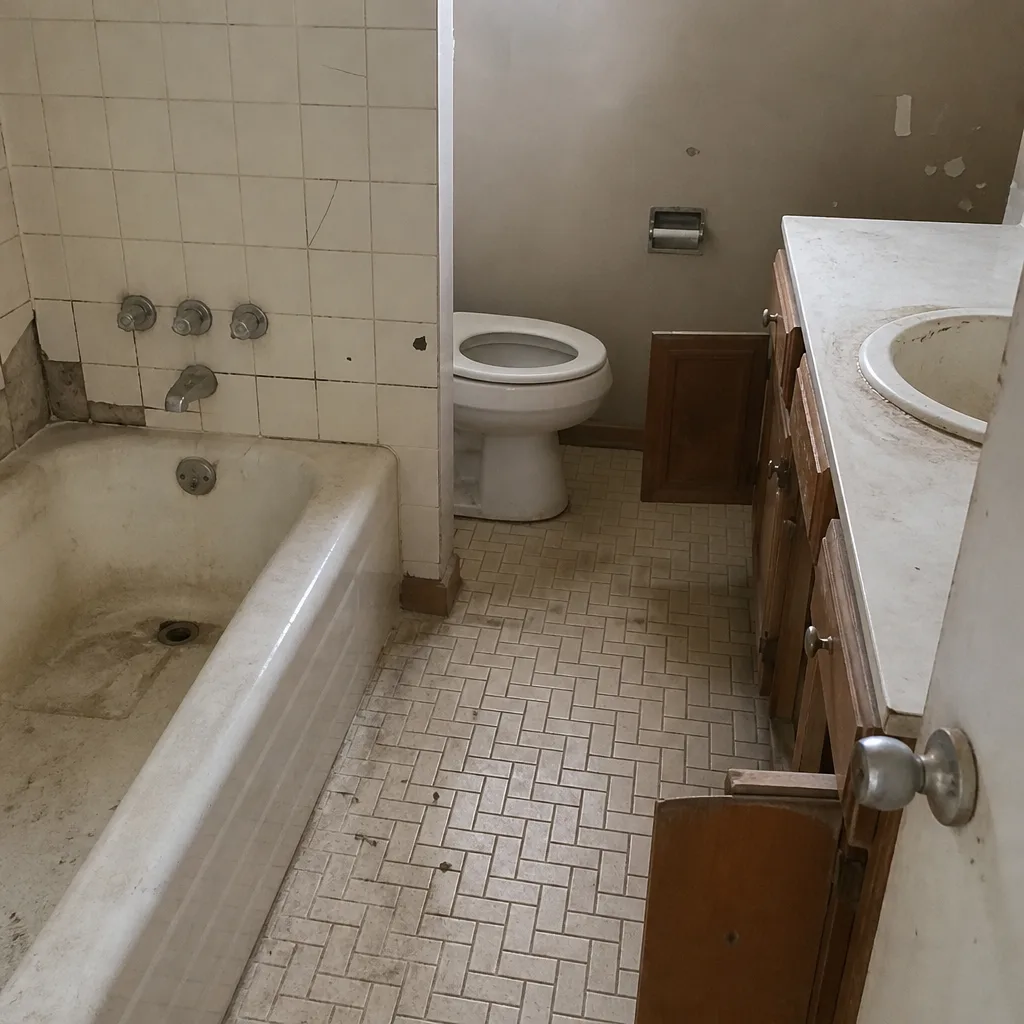 Before
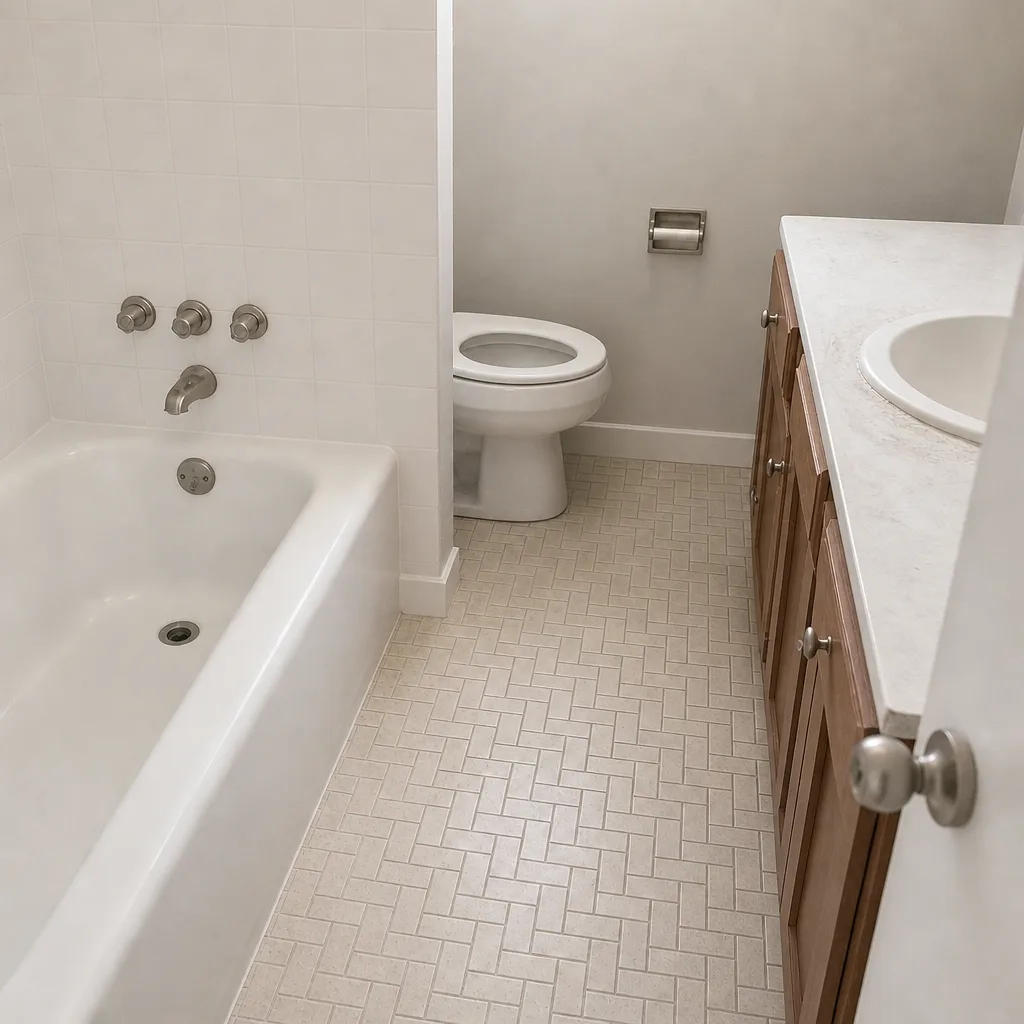 After
The Five-Year Milestone Checklist
Some maintenance only comes due once or twice a decade, and those items have a known failure window. Put these on the calendar at five years and every five years after.
- Re-level check on the ADU slab. Not a repair, a check. A professional can confirm the slab hasn’t shifted and that no cracks have opened beyond what patching handles.
- Re-torque deck ledger bolts. If your addition includes a deck, the ledger bolts holding it to the structure loosen over years of thermal cycling. This is one to have a pro handle; the torque spec matters and so does inspecting the wood around each fastener.
- Re-inspect roof penetration seals. Vents, skylights, and chimney penetrations have a known seal life of roughly five to ten years in desert conditions. Inspect and re-seal as needed.
- Re-seal the slab expansion joint where the addition meets the original foundation. This joint is designed to flex and the sealant inside it wears out.
- Full exterior caulk replacement on all old-to-new seams. Even a well-maintained sealant line usually needs a full replacement at the decade mark, sometimes sooner here.
- HVAC and water heater service review for the ADU, including checking whether the equipment is still sized for how the unit is actually used.
If a five-year check turns up a problem at a seam you never touched, that’s usually the moment to bring someone in. Small fix now, small fix later. Wait, and it becomes a bigger job.
Drainage and Flash Flood Season Prep
Paradise gets its water in bursts. That changes the maintenance priority for any addition, because a new addition changes where water goes. New roof planes shed to new places. New gutters have their own downspouts. New grading may have altered an old swale.
Before the fall wet season, do a drainage walkthrough:
- Gutters clear of debris, all downspouts connected and discharging at least a few feet from the foundation.
- Ground sloping away from the addition on all sides, no pooling spots near the slab edge.
- Any swale or drainage channel on the property still open and clear.
- Window wells, if any, drained and covered.
- Nothing stored against the addition’s exterior walls where water can sit.
This is also a good time to check the fence line at the property edge. If you built an addition that changed how water moves across the yard, Fence Installation in Paradise covers drainage where fence posts meet the ground, a spot that often shows problems first.
Common Mistakes to Avoid
- Treating the addition like the rest of the house. It has its own seams, its own systems, and its own schedule. A single whole-house checklist misses the parts that fail first.
- Caulking over failing caulk. You get a month of looking fine and a bigger repair later. Remove and replace, don’t cover.
- Skipping the roofline junction inspection. The single most-neglected spot on any addition, and the most expensive to ignore in Paradise’s heat-expansion climate.
- Never touching the ADU panel. Breakers that sit unused for years can seize. And an unlabeled panel is a safety problem, not just an inconvenience.
- Ignoring the first-year settling window. Both directions of this mistake hurt. Patching a normal hairline crack is wasted effort. Ignoring a crack that keeps widening is how you miss real movement.
- Assuming new means maintenance-free. A five-year-old addition is exactly at the age when seals and penetrations start wanting attention.
- Letting water find the seam. Clear gutters and correct grading before the wet season, not after the ceiling stains.
When to Call a Professional
Some tasks on this list you can do yourself with a tube of sealant and a Saturday. Others need trained hands. Call us if you’re seeing water staining below any roofline junction, if a crack keeps widening after the year-one settling window, or if a door or window stays stuck in every season. Call if the ADU panel has any sign of heat discoloration or won’t trip correctly. Call before you climb a roof at a steep pitch. Call if a five-year milestone task turns up something you don’t recognize.
Barrett & Sons Construction Paradise offers free estimates in Paradise, and the crew can walk the seams and systems of an addition or ADU to tell you what’s maintenance and what’s a repair. We pull permits and pass inspections on the jobs that need them, and every scope change arrives as a written change order before any work moves. Call (855) 596-7029 for a free estimate.
Frequently Asked Questions
Twice a year on exterior seams and flashing, once a year for the ADU utility panel and drainage walkthrough. That’s the minimum. Paradise’s thermal swing from 115°F summer heat to cool winter nights puts more cycles on sealants than most climates, so two exterior inspections a year beats one. Calls answered by a live person at (855) 596-7029 if you’d rather have us look.
The flashing where the addition roof meets the existing exterior wall. It’s the most neglected spot on any addition and the most likely to fail in a heat-expansion climate. A roofline junction gets hundreds of expansion cycles a year here. Check it every spring.
Yes, hairline cracks at drywall seams and small grout gaps in the first 12 months are normal settling. Doors that stick in one season and free up in another are also normal. What’s not normal is a crack that keeps widening month over month, or anything that appears after month twelve. Those deserve a professional look.
Yes. A legal ADU has its own utility panel, its own shutoffs, and often its own sub-meter. That’s a system to maintain, and it’s easy to forget because it sits on the same property. Label the panel, trip each breaker once a year, and read the sub-meter monthly. Anything inside the panel is electrician work.
When it peels away in strips on a fingernail test, when you see visible separation, or when the surface starts chalking white. In our experience the low-humidity winter here dries sealant out faster than a temperate climate, so a full replacement of exterior seams on the addition usually comes due at the decade mark. Spring and fall checks catch it early.
Routine maintenance like caulk, sealant, and paint doesn’t need a permit. Structural repairs, electrical work inside the ADU panel, and re-roofing generally do. If you’re not sure which side of the line your job falls on, call (855) 596-7029 and we’ll tell you straight. On every eligible job we pull the permits and get the inspections signed.
The Bottom Line
An addition or ADU needs its own maintenance rhythm, and the schedule in this guide is built for Paradise conditions specifically. The two exterior checks each spring and fall catch most of what would otherwise become big repairs. The annual panel and drainage walkthroughs keep the systems behind the walls honest. The five-year milestones catch the tasks that only come due once in a while. None of it is hard. All of it is calendar work. Start with the flashing at the roofline junction, because that’s the spot that fails first. When it’s time for experienced eyes on a seam, a system, or a repair, Barrett & Sons Construction Paradise is a phone call away, and estimates are free. For the full picture of what an addition involves from the start, start with our Barrett & Sons Construction Paradise home page. Reach us at (855) 596-7029 to schedule your free estimate.
Written by the team at Barrett & Sons Construction Paradise.