Last updated November 18, 2026







Free written scope consultation - allowances, timeline, and change-order rules on paper before a single trade is scheduled
Bathroom Remodeling Troubleshooting: Common Problems and How to Fix Them
Grout cracking within a year of a new tile job is almost never a grout problem. It’s a substrate problem. The backer board, the mortar bed, or the subfloor underneath flexed, and the grout cracked because it was the only thing in the assembly that couldn’t bend. Re-grouting it fixes the look for a few months and then it splits again in the same lines. We’ve walked into hundreds of bathrooms across Paradise in the middle of exactly this, and the story behind the symptom is usually the same handful of shortcuts. This guide works backward from what you’re seeing to what actually caused it, so you spend money on the right fix instead of the visible one.
Quick Answer
Most bathroom remodel failures trace to one of three root causes: a skipped inspection, a wrong product category installed in the wrong place, or a waterproofing step done out of order. Diagnose the symptom first (cracked grout, a door that won’t shut, mold on the ceiling), then trace it back to the assembly underneath. The correct fix almost always involves opening something up, not sealing over it.
Styles & brands we work with
- Kitchen remodeling
- Bathroom remodeling
- Home additions & ADU
- Roofing
- Windows & doors
- Driveway & pavers
- Fence
Table of Contents
- Symptom-to-Cause Diagnostic Tree
- Where Bathroom Remodel Leaks Actually Start
- The New Tile, Old Drain Problem
- Ceiling Mold and Paint Failure Above the Shower
- The Door That Won’t Close After a Remodel
- Exhaust Fan Runs But Doesn’t Clear Steam
- What a Legitimate Callback Process Looks Like
- Common Mistakes to Avoid
Symptom-to-Cause Diagnostic Tree
Diagnose before you repair. Every symptom on a bathroom remodel points to a specific layer of the assembly, and the layer is the thing you actually have to fix. Here’s how we sort them on a first visit.
- Grout cracking in straight lines or at the corners. Root cause: deflection. The subfloor is flexing under the tile, or the backer board wasn’t properly fastened and bedded. Correct fix: pull the tile, address the subfloor or replace the backer, reinstall. Wrong fix: sand out and re-grout.
- Tile lippage (one edge higher than the next). Root cause: inconsistent mortar coverage, usually from a spot-bonded install or a trowel notch too small for the tile size. Correct fix: remove and reset the affected tiles. Wrong fix: try to sand the high edge down.
- Caulk failure at the tub or shower transitions. Root cause: the joint is moving and the caulk was applied over a wet or dirty surface, or a rigid grout was used where a flexible sealant belongs. Correct fix: remove all old sealant, dry the joint, use a proper silicone. Wrong fix: lay a fresh bead over the top.
- A door that won’t latch after the remodel. Root cause: the finished floor came up higher than the rough opening allowed, or the jamb moved when the tile went in. Correct fix: shim and rehang the door, or undercut it. Wrong fix: force the latch.
- Fan runs but steam stays. Root cause: undersized exhaust fan or a ducted run that terminates in the attic. Correct fix: right-size the fan and vent it outside. Wrong fix: run it longer.
If your bathroom is part of a bigger job, or you’re weighing a remodel against an addition, our team at Barrett & Sons Construction Paradise home can help you scope it. A diagnostic visit is cheaper than a repair done twice.
Where Bathroom Remodel Leaks Actually Start
Bathroom remodel leaks almost always originate at one of three specific points. Find which one you have and you’ll skip the guessing that costs homeowners hundreds of dollars on unnecessary repairs.
- Shower pan perimeter. The waterproofing membrane should turn up the wall at least a few inches and be sealed behind the backer board. When it’s cut short, or nailed through at the base to hold the backer, water tracks under the pan and shows up at the ceiling of the room below, days after the leak started.
- Tub spout wall penetration. The hole cut through the tile and backer for the spout is rarely sealed. A slow drip at the spout threads runs down the back of the wall for months. First sign is soft drywall on the other side, not a puddle.
- Toilet flange height. When a tile remodel raises the finished floor and the flange sits at or below the tile, the wax ring can’t seal and water wicks at the base. This one is common in Paradise because so many bathrooms here were retiled over the original subfloor without moving the flange.
Identifying which one you have is mostly about location. Under the shower? Perimeter. Soft wall behind the tub faucet? Spout penetration. Water at the toe of the toilet base? Flange height. Once you know the point, the fix is a proper repair of the assembly, not a bead of silicone and a hope.
The New Tile, Old Drain Problem
A tile remodel can raise the floor height enough that the existing drain flange sits below the finished floor. That’s a code violation, and it’s a future leak point. The flange is supposed to sit flush with the finished surface so the wax ring can compress evenly; when it’s recessed, the ring deforms and water escapes at the base. You won’t see it right away. You’ll see it a year later as a soft subfloor or a stain on the ceiling below.
This one happens on Paradise remodels more than you’d guess, especially where the existing shower was a builder-grade fiberglass pan and the upgrade was tile over a thicker mortar bed. The tile elevation grew a half inch; nobody re-set the drain. When we catch it, we reset the drain to the new finished height and re-set the flange. The corrected height matters more than the brand of fixture, and it’s exactly the sort of detail a permit inspection is there to catch. The permit inspector works for you, not for us, and that’s why we want the inspection on every bathroom job we quote.
If you’re planning a bathroom remodel alongside other exterior work, like the front entry, the driveway, or the garage push-out, our Driveway & Pavers in Paradise page shows how we sequence a full property improvement so the waterproofing and exterior drainage get handled together.
Ceiling Mold and Paint Failure Above the Shower
Mold on the ceiling above the shower is a ventilation sizing problem in about 90% of the cases we look at. It’s not a paint quality problem, and painting over it (even with expensive bath-rated paint) buys a few months at best. The real issue is that the fan is too small for the room, ducted to the wrong place, or simply switching off too soon after a shower.
The rule we use: the exhaust fan should move at least 1 CFM per square foot of bathroom floor area, with a few extra CFM for every foot of duct run over 10 feet. A 60-square-foot Paradise bathroom with a 15-foot duct run needs roughly 75 CFM minimum, and most builder-grade fans in this area are 50 CFM. The steam sits against the ceiling, condenses on the cool drywall, and feeds mold within weeks.
Two fixes that actually work:
- Replace the fan with a properly sized unit and confirm the duct terminates at the roof or exterior wall, not into the attic.
- Install a timer switch so the fan runs 20 minutes after the shower, not 2. Mold doesn’t grow in a dry bathroom.
If the ducts already terminate in the attic, that’s a bigger issue than the fan. In Paradise attics hit 130°F in July, so a duct into the attic dumps moisture into a hot box that grows mold and rots roof sheathing. Ducted outside, every time.
The Door That Won’t Close After a Remodel
A bathroom door that won’t close or latch after a remodel is almost always a floor-height or jamb-shift problem, not a defective door. During a tile or mortar bed install, the finished floor rises; the rough-opening height was set for the old floor. If the contractor didn’t account for that rise, the door catches at the top or drags at the bottom.
Common causes in a Paradise bathroom remodel:
- New tile plus backer board plus thinset raised the floor 3/4 inch or more.
- The jamb moved when the tile met the casing, closing the gap the door needs.
- The hinge side of the door was re-hung without shimming, so the door sags.
The correct fix is either to undercut the door, shim and re-hang the jamb, or re-set the casing if the jamb itself shifted. Forcing the latch is the wrong move; it strips the strike plate and pushes the problem into next year. If you’re planning an entire bathroom plus a bigger layout change, our Home Additions & ADU in Paradise team handles the framing side when walls need to move, not just a door.
Exhaust Fan Runs But Doesn’t Clear Steam
An exhaust fan that runs but doesn’t clear steam is working harder than it’s spec’d to, and the result is moisture damage that spreads. Three things to check before you replace the fan.
- Duct size. A 4-inch flex duct moves much less air than the fan’s rating claims. A 6-inch rigid duct does what the label says. Switching from flex to rigid is often the whole fix.
- Duct termination. The duct must exit through the roof or a side wall with a proper cap, not dead-end in the attic. Confirm the termination; don’t take the installer’s word for it.
- Air intake gap. A bathroom needs an undercut on the door (usually 1/2 to 3/4 inch) or a transfer grille. If the door seals tight, the fan can’t move air and just spins.
The right replacement is sized to the room and vented outside. When your local crew installs the fan correctly, it’s one of the cheapest repairs you’ll make in Paradise – and one of the few that stops a mold problem before it starts. We install ViewLux fans and similar premium exhausts on most of the bathrooms we touch, and we list the model on the written scope so you can look it up.
What a Legitimate Callback Process Looks Like
A callback is not a favor. It’s the documented process a contractor built into the job before the first nail moved. Here’s what to expect, and how to tell a real warranty from a promise.
- Document the defect in writing. Photograph the crack, the leak, or the door gap. Note the date the remodel finished. Send it by email or text so there’s a timestamp.
- Read the warranty wording. A written warranty should cover workmanship defects for a defined period and name the remedy (repair, replace, refund). If the warranty only covers materials, the crew’s work is not actually guaranteed.
- Ask for a written callback schedule. A real callback gets a date, not a voicemail. Our Fence Installation in Paradise customers get the same courtesy on outdoor work that bathroom customers get indoors: a date and a name.
- Know when it’s no longer a callback. Water leaking behind a wall at a valve, a toilet that won’t seal, or a cracked structural tile bed moves past a workmanship fix. That’s a licensed plumber or a structural engineer, and a fair contractor will tell you so instead of troubleshooting it themselves.
The 90-Day Done Right Promise is written on every contract we sign. If a defect shows up inside that window and it’s ours, we come back and make it right on one call. No argument, no invoice.
Common Mistakes to Avoid
- Re-grouting cracked grout without addressing deflection. The crack tells you the substrate moved. Re-grouting is a cosmetic fix that fails sooner every time.
- Sealing over a leaking shower pan with clear silicone. The pan is a membrane, not a surface. Water will keep traveling under it, and the real damage will be in the room below.
- Skipping the permit because the last contractor said it wasn’t needed. In Paradise, any bathroom remodel touching plumbing rough-in or walls requires an inspection. The inspection is your cheapest insurance.
- Letting the contractor install a bathroom floor without confirming the toilet flange height after tile. Ask the question before the tile is set, not after.
- Buying a bigger fan without checking the duct size. A bigger fan on a 4-inch flex duct is louder and moves the same air. Fix the duct first.
- Accepting a verbal quote and a verbal warranty. Every scope, allowance, and price change should arrive in writing. An allowance that isn’t on paper is a surprise waiting for a date.
- Hiring the cheapest bid and hoping. The price gap is usually in the waterproofing layer you’ll never see once the tile goes down. It’s also the layer that fails first.
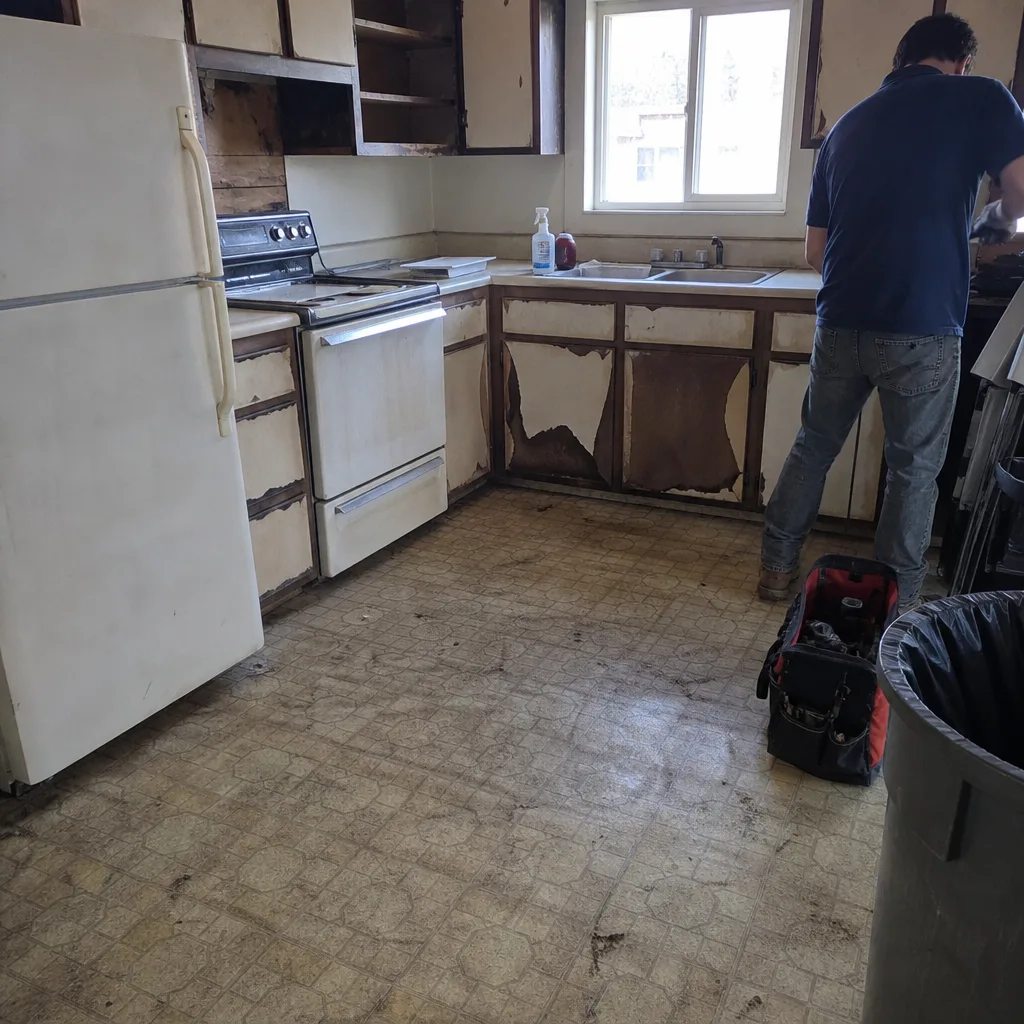
See the difference
 Before
 After
 Before
 After
 Before
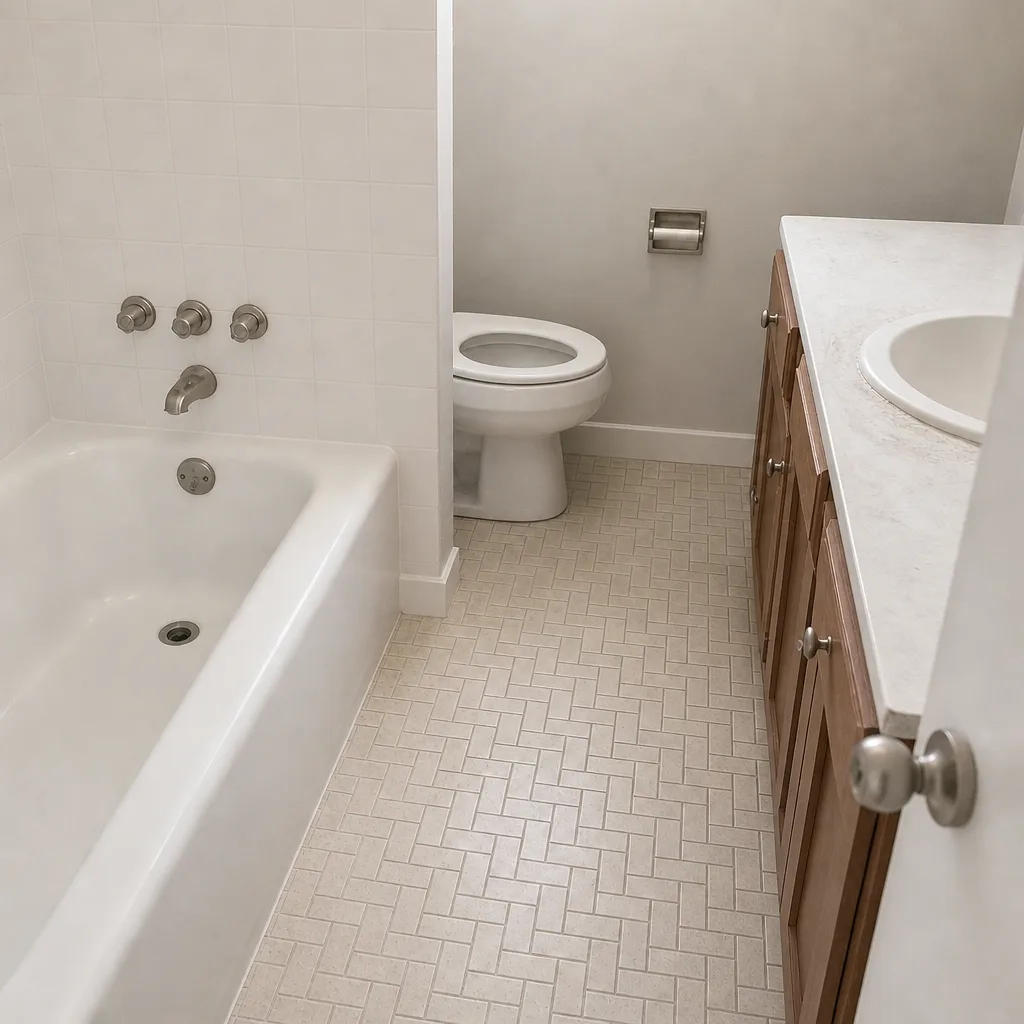 After
When to Call a Professional
Call us when the symptom involves water where it shouldn’t be, a shower pan that leaks below the tile, a toilet flange that’s recessed, mold spreading across drywall, or a structural tile bed that’s cracked and moving. Those are plumbing and framing problems dressed up as cosmetic issues, and a homeowner patch won’t stop them. Also call us before a remodel starts if you’ve been told a permit is optional; pulling it and passing inspection is the cheapest step on the whole job. Barrett & Sons Construction Paradise offers free estimates in Paradise and across the surrounding area – call (855) 596-7029.
Frequently Asked Questions
A shower pan repair typically runs $450-$900 depending on whether the tile has to come up to reach the membrane. A full re-do of the pan with new waterproofing runs higher. Call us for an exact quote – estimates are free.
Not without a written change order that you approve before work continues. Every scope, allowance, and scope change arrives in writing before a single nail moves. If the price changes, you’ll see why on paper before it touches your bill.
Yes, on every eligible job. Permits are pulled and inspections signed, because the last contractor most customers used told them permits were optional. That’s the contractor you don’t want.
A typical hall bathroom takes 2 to 4 weeks once materials are on-site. A full primary bathroom with layout changes runs 4 to 6 weeks. The schedule assumes permits and inspections land in sequence, which is why we pull them at the start, not the end.
Cracked grout within 12 months is a deflection problem, not a grout problem. The substrate underneath moved and the grout was the first thing to fail. The fix is to pull the affected tile and address the subfloor or backer, not to re-grout.
Only if it’s properly sized to the room at roughly 1 CFM per square foot and ducted outside with a rigid duct. Most builder-grade fans are undersized and vented into the attic, which is why mold keeps returning on ceilings in Paradise homes.
The Bottom Line
Bathroom remodel problems are almost always downstream of three root causes: a skipped inspection, a wrong product category, or a waterproofing step done in the wrong order. Work backward from the symptom and the shortcut usually reveals itself. Grout cracks mean the substrate moved. Water at the ceiling means the pan, the spout penetration, or the flange. Mold on the ceiling means the fan is undersized or vented wrong. The right fix opens the assembly; the wrong fix seals over it. If you’re in Paradise and unsure which one you’re facing, the cheapest money you’ll spend is the diagnostic visit before the repair. Call (855) 596-7029 for a free estimate, and we’ll put the scope, the allowance, and any change in writing.
Written by the team at Barrett & Sons Construction Paradise.