Last updated November 18, 2026
Free written scope consultation - allowances, timeline, and change-order rules on paper before a single trade is scheduled
DIY vs Professional Driveway & Pavers: What’s Safe to Do Yourself
The part of a paver driveway that most confident DIYers try to shortcut is the exact task that decides whether the surface above it lasts ten years or one. That task is base compaction. In Paradise, where caliche soil turns excavation into a fight and monsoon-season downpours test every edge restraint you set, we’ve watched homeowners nail the pattern layout, get the polymeric sand color just right, and then lose the whole job because the base under it was never compacted to spec. Nobody sees the base layer, so nobody thinks to spend the time or money there.
This guide breaks the job down task by task, because “can I DIY a paver driveway?” isn’t a yes-or-no question. Some of it you can absolutely handle yourself. Some of it needs equipment that costs more to rent than a crew pays itself. And a few parts of it, in Paradise, shouldn’t be in your hands at all. You’ll get the honest breakdown, the real equipment math, the Clark County permit rules that apply whether you swing the hammer or not, and the three questions that will tell you whether a paver crew actually knows desert work.
Quick Answer
You can safely do your own paver driveway layout, pattern planning, and polymeric sand finishing in Paradise, but base excavation, compaction, and any cutting near buried utilities are jobs that need equipment and experience most homeowners don’t have, and they’re where DIY installs fail. A full DIY paver driveway typically costs more in rental equipment and redo risk than most people expect, and the base compaction step alone is enough reason to hand the whole job to a proven crew if you want ten years out of the surface.
Styles & brands we work with
- Kitchen remodeling
- Bathroom remodeling
- Home additions & ADU
- Roofing
- Windows & doors
- Driveway & pavers
- Fence
Table of Contents
- The Task-by-Task Safety Matrix
- What DIY Really Costs in Rentals and Tools
- Clark County Permits and Inspections, DIY or Not
- Why Desert Base Layers Fail Where They Don’t in Portland
- How to Vet a Paver Contractor in Paradise
- Common Mistakes to Avoid
- When to Call a Professional
- Frequently Asked Questions
The Task-by-Task Safety Matrix
Paver work breaks into eight discrete steps, and each one carries a different level of risk. Here’s how we’d grade them if a neighbor asked us across the fence in Paradise.
- Layout and pattern planning: DIY-friendly. You’re measuring, chalking lines, and choosing a running bond, herringbone, or basket weave. Mistakes here cost time, not safety. Getting it wrong means pulling courses up and re-cutting edges, which is frustrating but fixable.
- Excavation on caliche: Needs assessment. Sand and gravel dig easy. Caliche doesn’t. In Paradise lots, caliche often means a rotary hammer or mini-excavator and a whole extra day of labor. If you can’t break it with a spade, that’s your answer.
- Sub-base and base installation: Equipment-dependent. Road base and sand need to go in lifts (typically 2 to 4 inches at a time) and get moisture-conditioned. You cannot eyeball this. You need a plate compactor and a moisture meter, and you need to hit the right water content on each lift.
- Base compaction: Professional only, unless you own the equipment. See the section below for why this single step decides your outcome.
- Edge restraint setting: DIY-learnable. This is spiked plastic or aluminum edging, set true, under tension, with proper spikes. Learnable in an afternoon.
- Paver laying: DIY-friendly with help. One person throws pavers, one keeps the pattern. A 1,000-square-foot driveway is a full weekend with two people who know what they’re doing.
- Cutting near utilities: Professional only. Gas, water, and electrical lines run under and alongside driveways. A masonry saw through a gas service is not a DIY story you want to tell.
- Polymeric sand finishing: DIY-friendly. Sweep in, mist, cure. Do it early in the day so it cures before the sun is at full strength.
We’ve seen Paradise homeowners knock out steps 1, 5, 6, and 8 successfully. Steps 2, 3, 4, and 7 are the ones that multiply the cost of a redo.
What DIY Really Costs in Rentals and Tools
The rental bill on a proper DIY paver driveway in Paradise is where most of the “we’ll save money” math falls apart. A homeowner budgets for pavers and sand, then gets to the counter at the rental yard and discovers the equipment list.
- Plate compactor: Essential for base and pavers. A forward plate runs roughly $70 to $95 a day at Paradise-area rental yards, and you’ll need it 2 to 3 days minimum on a fair-sized driveway. That’s $200 before fuel.
- Vibratory plate with water tank (for polymeric sand): Another $110 to $150 a day. Some yards include this on the same rental, some don’t.
- Rotary hammer or mini-excavator (if caliche): $130 to $220 a day, or a mini-ex at the high end. Caliche jobs frequently tip into a two-day excavator rental.
- Laser level and tripod: $50 to $70 a day. You need this to hold fall and drainage across the surface. Eyeballing drainage is how you end up with a pond at the garage door after a monsoon.
- Wet masonry saw: $65 to $95 a day. Paver cutting on anything but a straight edge requires a real saw, not a 4-inch grinder.
- Hand tools and safety: Chalk line, screed, rubber mallet, knee pads, hearing protection, dust masks for cutting. Call it $150 to $250 one-time if you don’t own them.
Add it up and a homeowner doing a 1,000-square-foot Paradise driveway will spend somewhere between $900 and $1,500 in rental equipment alone, before a single paver shows up. And that’s the best case. If you’re doing two weekends because of weather or a supply run, the meter keeps running while the driveway sits half-finished. Compare that against a free estimate and a written change order that locks in the price, and the savings argument gets thin fast.
Clark County Permits and Inspections, DIY or Not
This is where a lot of consumers get burned, and not just by contractors. The permit rules apply to you the same as they apply to a crew. In Clark County, a new driveway approach (where your driveway meets the public street) generally requires a permit from the county, and the permit process is not a form you fill out in the morning and forget about.
- Who can pull a driveway approach permit: In most Clark County cases, an owner-builder can pull the permit for their own primary residence. An owner who intends to rent or sell soon, or who’s pulling for a rental property, usually cannot use the owner-builder exemption. That’s the line most DIYers find out about after they’ve already excavated.
- What gets inspected: The approach width, slope, and thickness specification; the transition at the street; sometimes drainage. An inspector can require a re-pour or a re-cut, and there is no “nice try” pass.
- HOA overlays: Many Paradise subdivisions add a second layer of rules on top of county code. Paver color, driveway width, and even the pattern may be dictated by the community. That rug gets pulled out from under more DIY projects around Paradise than any code section.
- Sales disclosure: An unpermitted driveway approach can turn into a buyer’s negotiating chip at resale, and it’s the kind of thing a buyer’s inspector finds on day one.
The permit inspector works for you, not for us, and not for any other contractor. That’s why we don’t treat permits as a chore. Every eligible Barrett & Sons Construction job includes permits pulled and inspections signed, and that’s not a sales line in Paradise. It’s the difference between a driveway you can hand off clean at resale and one that raises questions.
Why Desert Base Layers Fail Where They Don’t in Portland
A paver driveway in Paradise is not built like a paver driveway in the Pacific Northwest or the Midwest, and the difference sits almost entirely in the base layer. Crews that learned in wet climates often don’t adjust, and their installations show it by year two.
- Moisture management runs the opposite direction. In Portland, base prep is about drainage away from the surface. In Paradise, base prep is about water retention during compaction, then drying before surface placement. If the base is too dry during compaction, it never bonds and the pavers settle unevenly. If it’s too wet, it pumps when you run the plate compactor and the lifts fail.
- Caliche is not a soil, it’s a plate. The calcareous layer that runs under many Paradise lots doesn’t absorb water, so water travels laterally and pools at the edges of pavement. Crews who don’t cut and grade for that end up with an edge that heaves outward in monsoon season.
- Monsoon season tests edge restraint, hard. A Clark County July storm can drop an inch in twenty minutes. That volume moves fast across a driveway. Undersized spikes or improperly bedded edge restraint lifts and lets the paver field spread. By the time you see it, the repair is half a driveway.
- UV and heat cycling shorten the polymer’s life. Polymeric sand in southern Nevada breaks down faster than in wetter zones. A properly installed job re-sands every four to six years. A poorly installed job re-sands after the first season because the joints never fully locked.
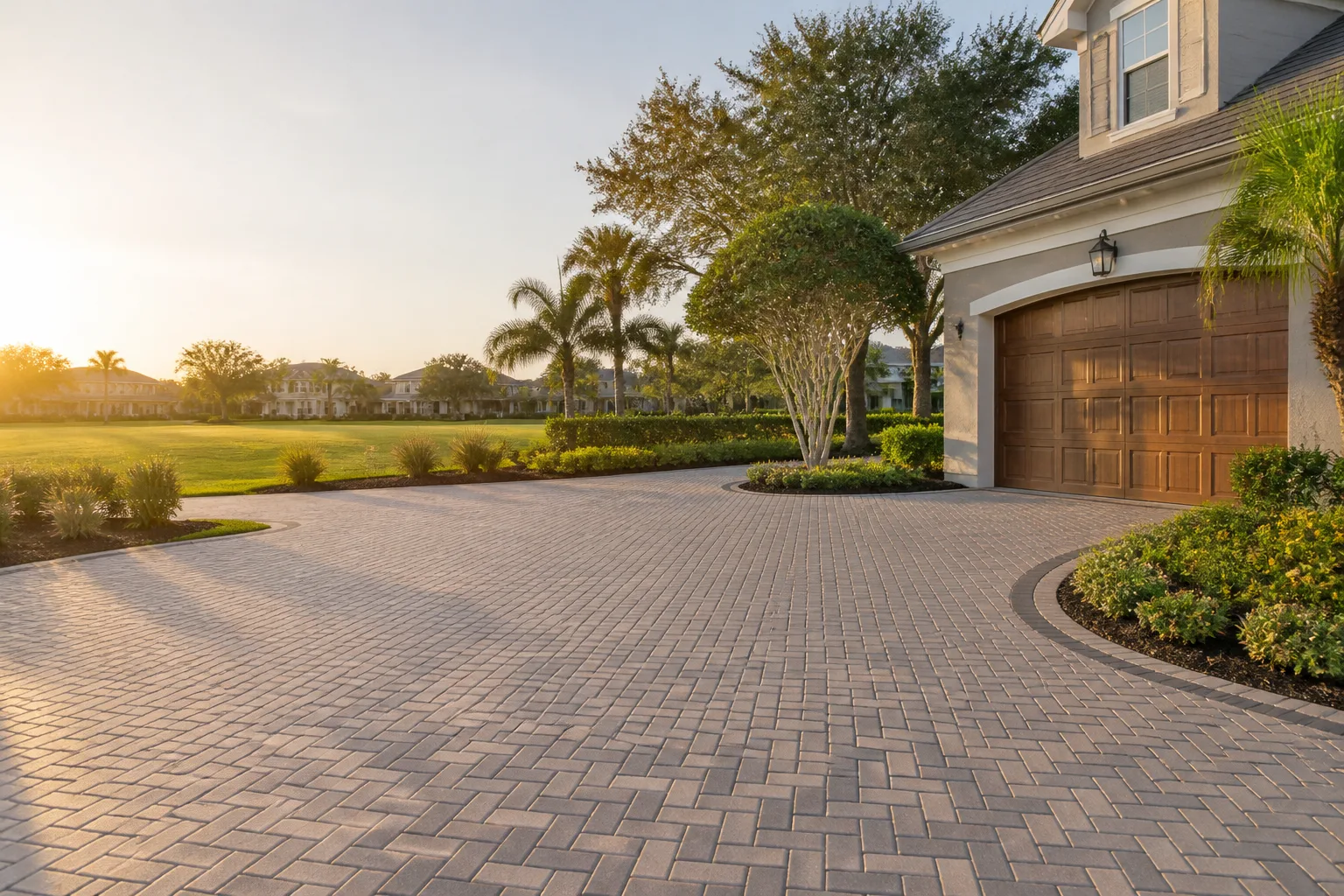
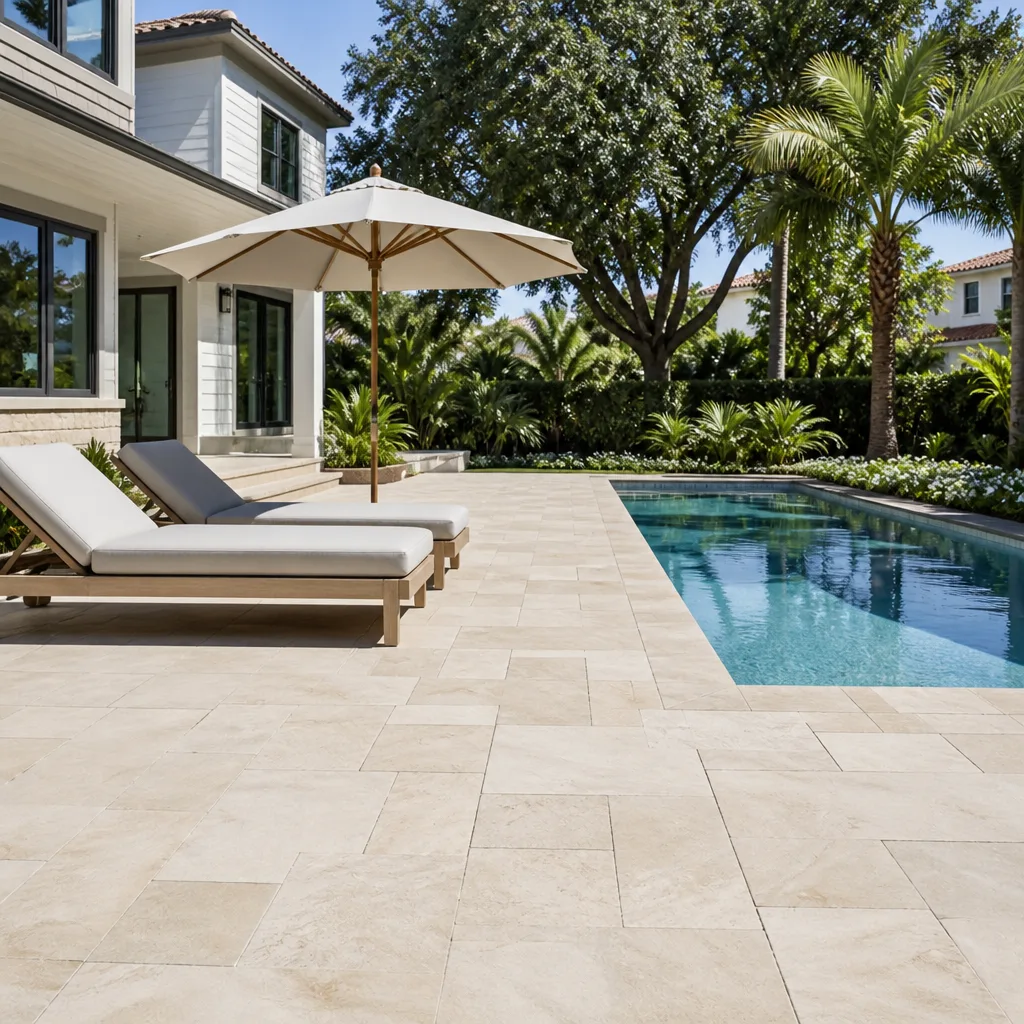
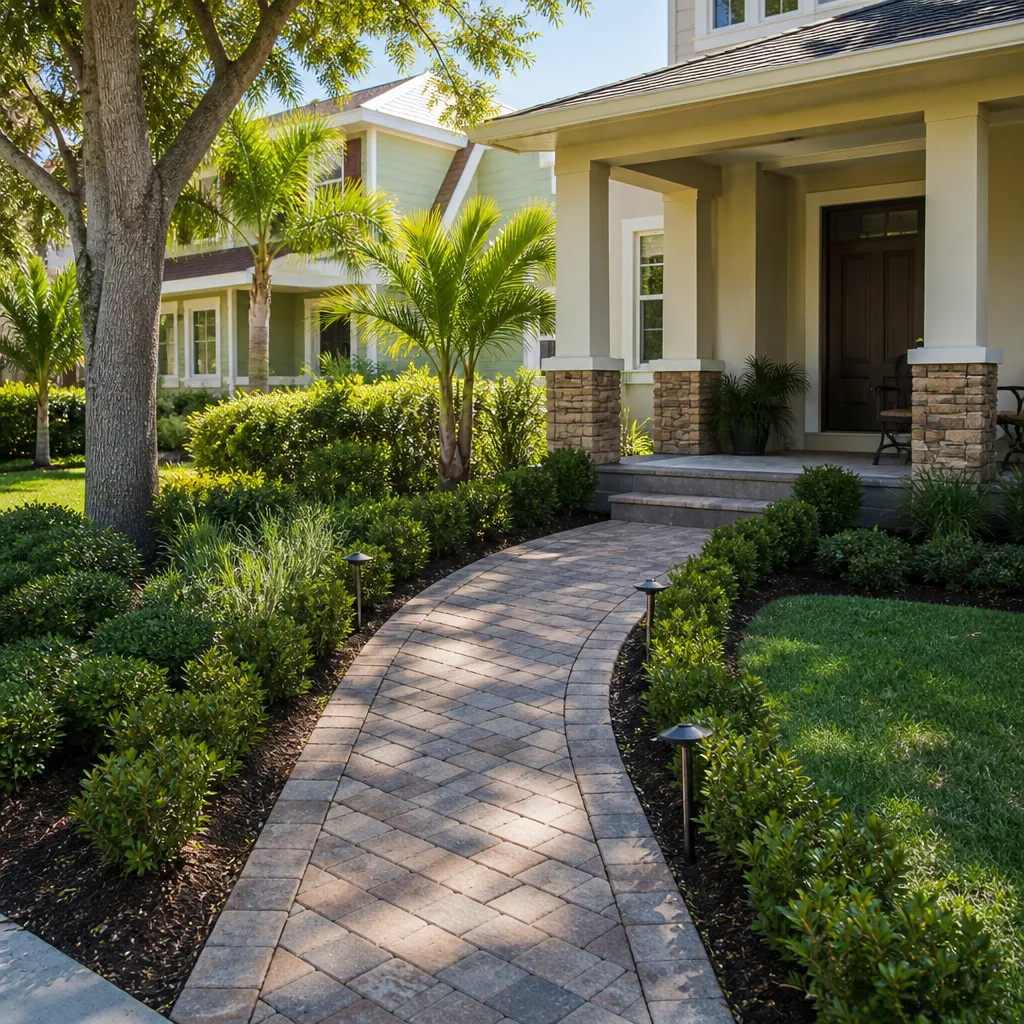
If you walk out to a Paradise patio or driveway and the pavers feel loose under the toe, or the sand is channeling out after every rain, the base layer is usually the culprit, not the surface. That’s the honest answer most installers will avoid because it means re-opening the whole job. For a broader look at what a properly spec’d paver installation involves in this climate, our page on Driveway & Pavers in Paradise walks through materials and specs.
How to Vet a Paver Contractor in Paradise
If you’ve decided to hand the job off, the three questions below separate crews that actually know desert paver work from crews that learned in another climate. Ask them in that order, and listen for whether the answer is a spec or a story. On desert base compaction, a good crew answers in moisture percentages and lift thickness. A marginal crew answers with “we’ve been doing this a long time.”
- “Show me your base spec, layer by layer, with compaction method.” A crew that knows desert work will name the base material (usually a spec’d aggregate base), the lift thickness (2 to 4 inches), the moisture method, and the number of passes with the plate compactor. If they can’t articulate that without looking it up, you’ve learned something.
- “What’s your edge restraint system and what spike length do you use here?” Desert crews know that monsoon volume demands a specific spike-to-run ratio. Ask what they use in Paradise and why. A good answer names the brand (Belgard or Techo-Bloc make edge restraint hardware that holds up here) and the reasoning behind the spike pattern.
- “Who pulls the drive approach permit, and when do I see the signed inspection?” The right answer is: the contractor pulls it, the homeowner’s name appears on the record as the property owner, and the signed inspection card comes to you at the end. Any answer that includes “we don’t usually pull permits for pavers” is the answer to a different question.
If you’re still weighing the whole scope and want to understand what permits and oversight look like across other trades too, our breakdown of Home Additions & ADU in Paradise covers how we handle the permit and inspection trail on bigger builds. The same discipline applies to a driveway.
See the difference
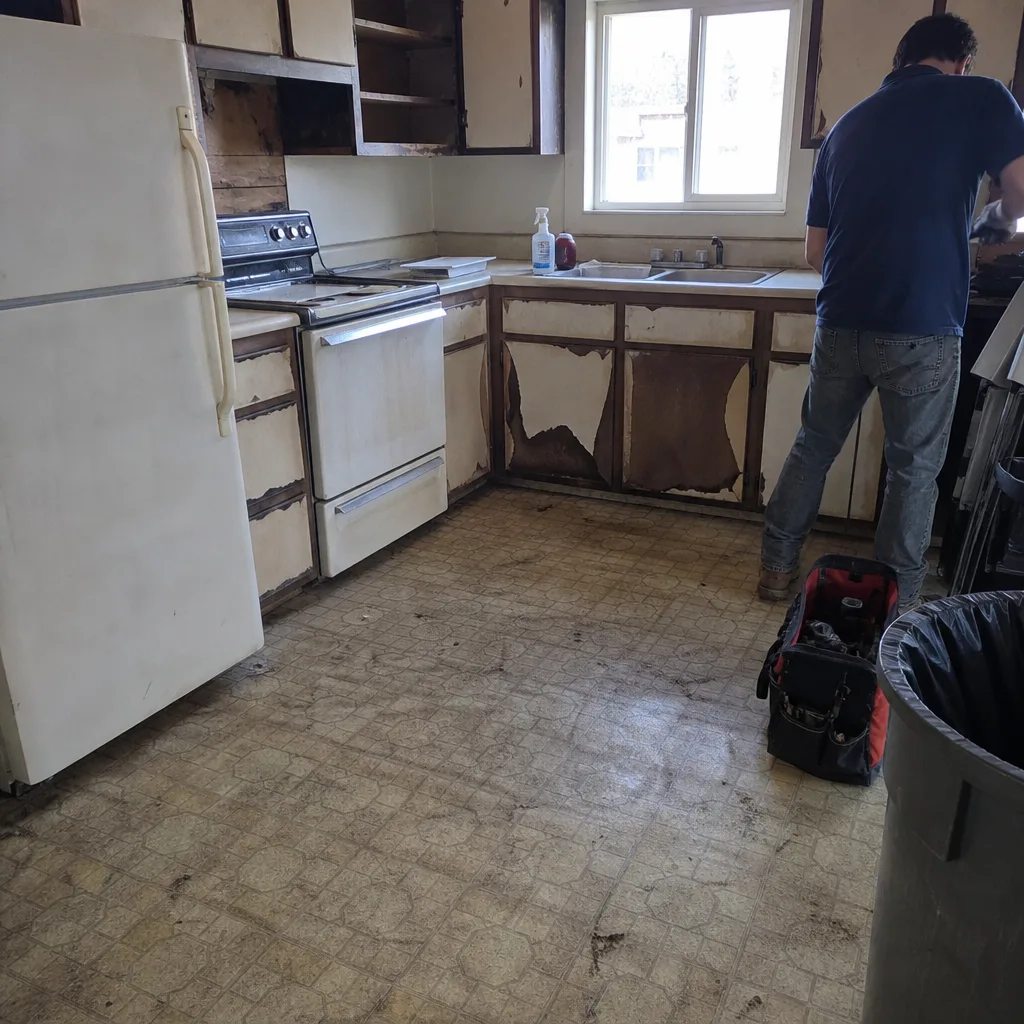 Before
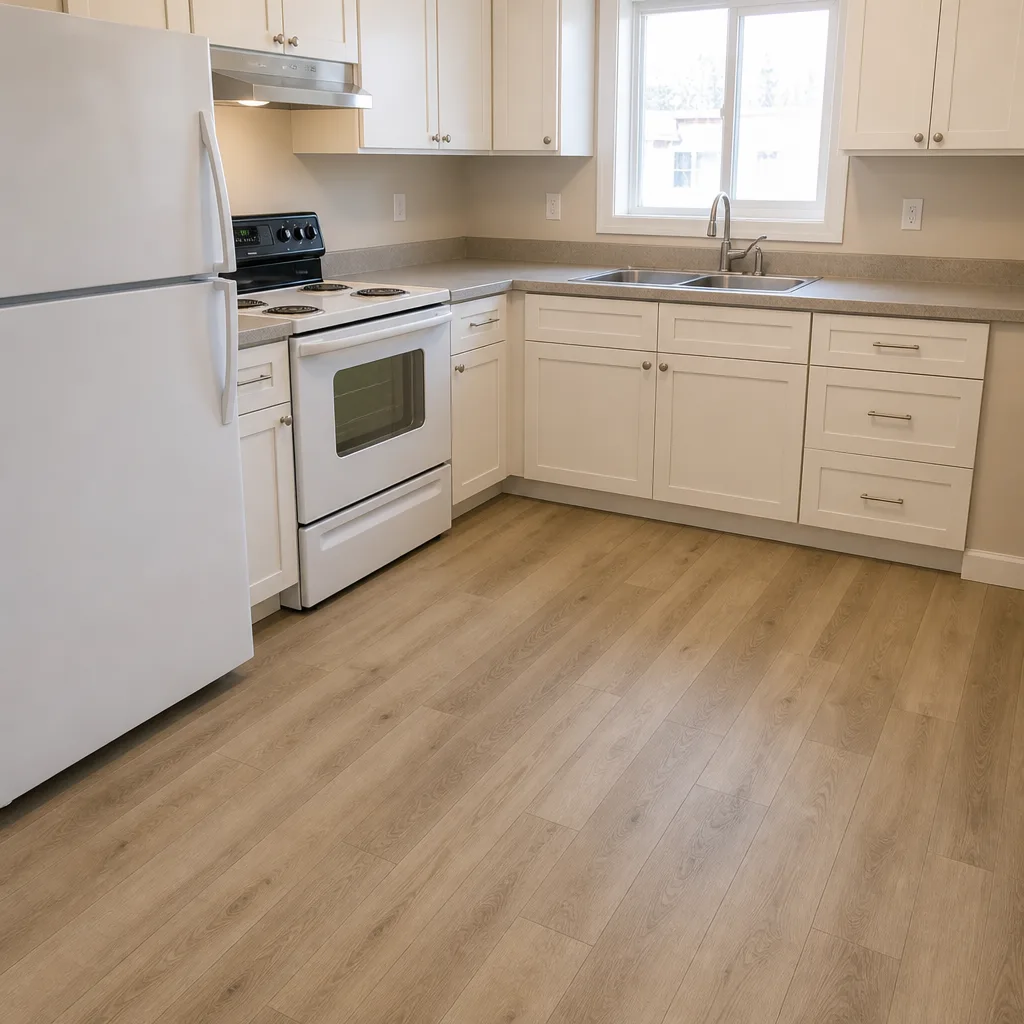 After
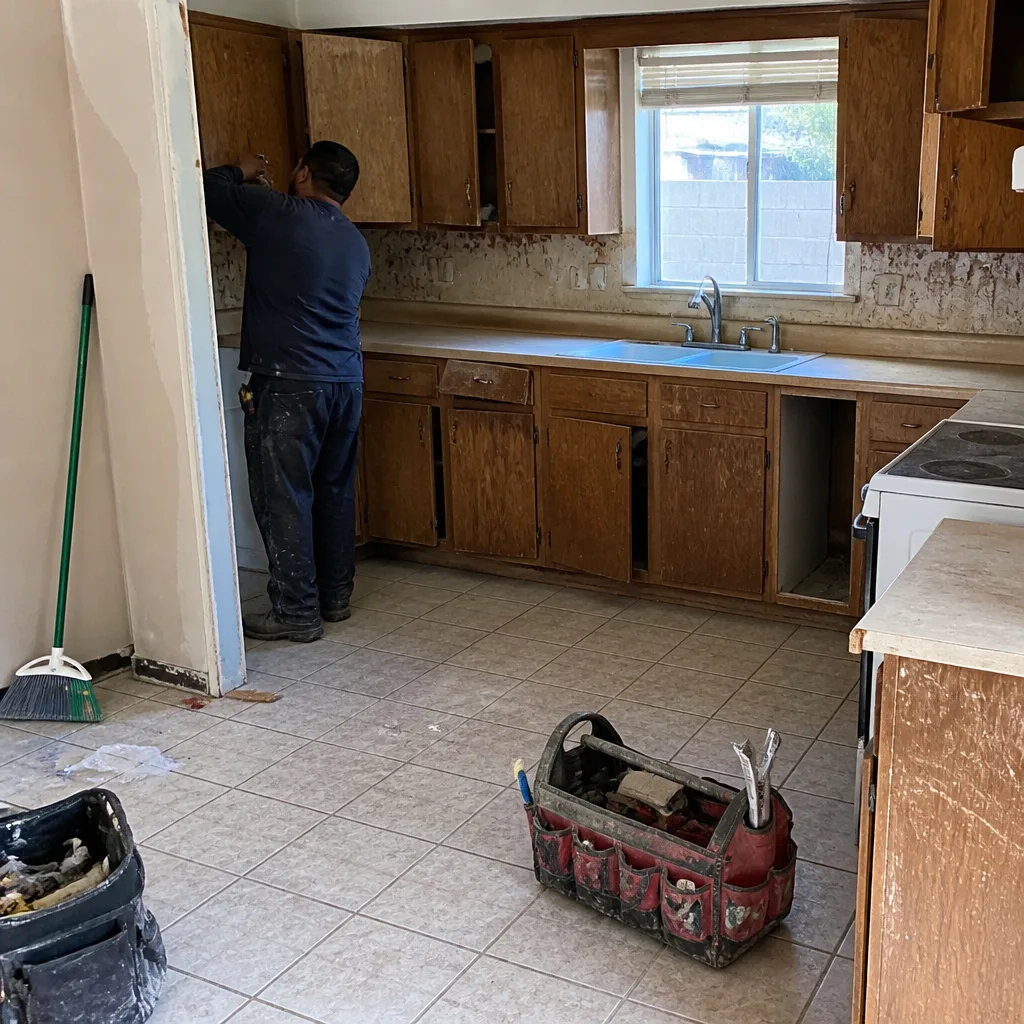 Before
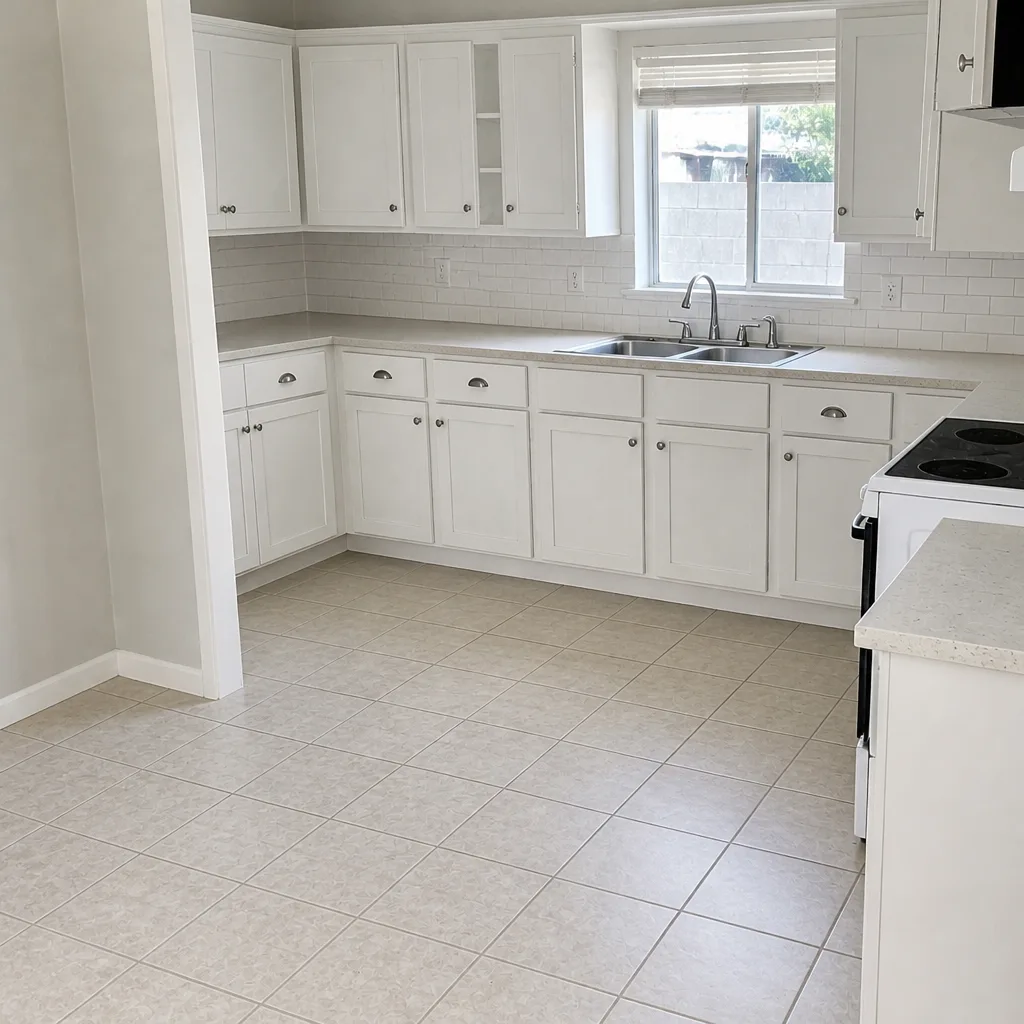 After
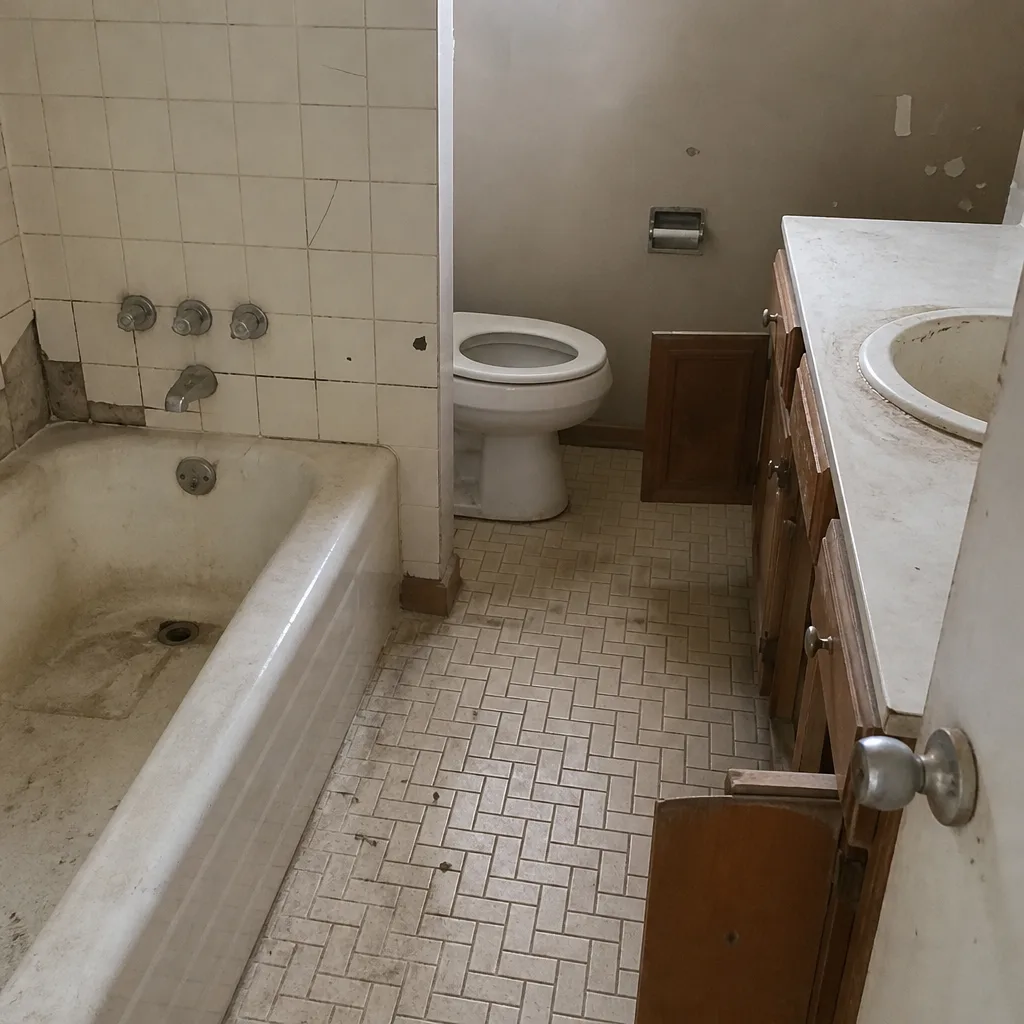 Before
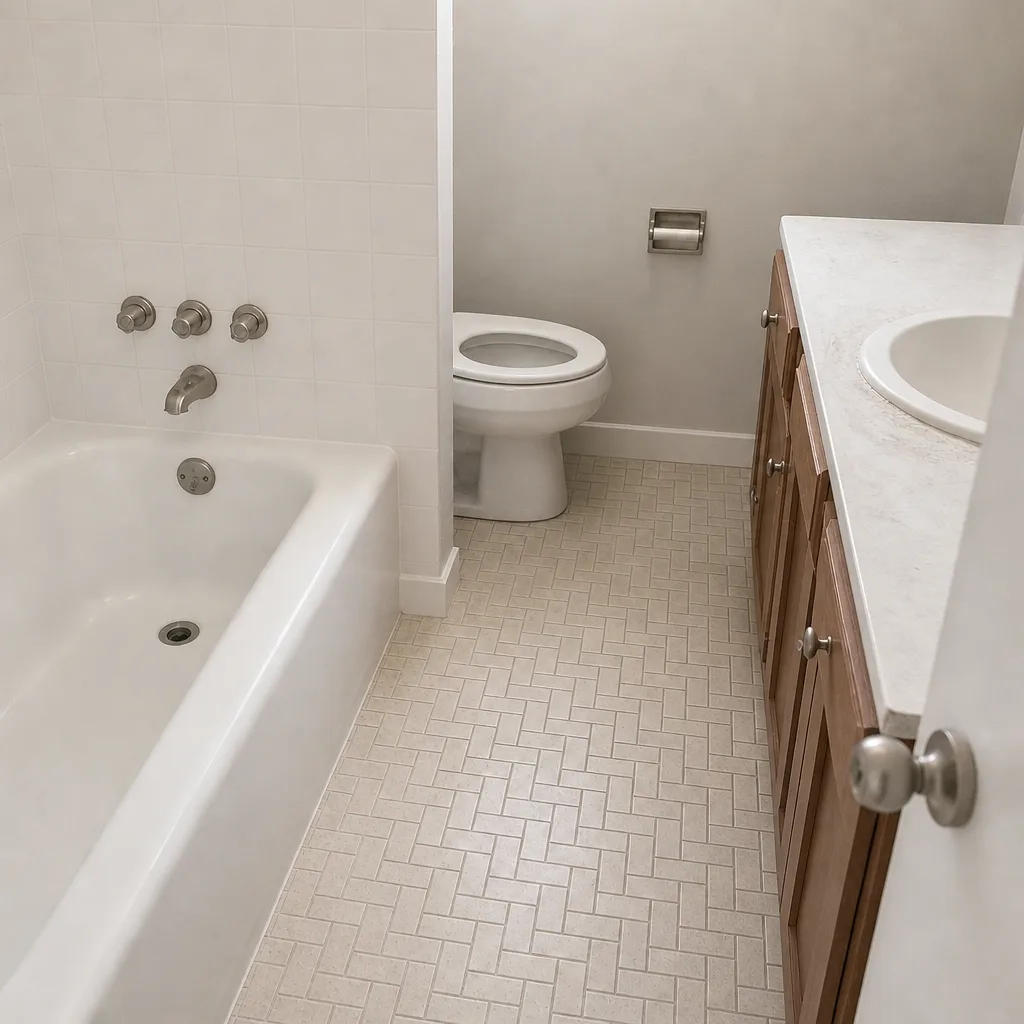 After
Common Mistakes to Avoid
- Skipping moisture conditioning on the base. A dry base never locks. It looks fine for a week and then every paver over it starts to rock. This is the number one cause of driveway failures we see across Paradise, and it’s invisible in the final photo.
- Cutting near a utility without a locate. Before any wet saw touches the ground, call 811 and get locates. In Paradise, gas and water line depth is not uniform across older lots, and a masonry saw through a service line runs into four figures of repair fast.
- Letting the rental yard drive the schedule. A homeowner who rents a plate compactor for a day and gets rained on gambles the whole job. A crew owns the equipment and just comes back tomorrow. DIY schedules in Paradise get wrecked by monsoon more often than by anything else.
- Using a grinder as a paver saw. A 4-inch angle grinder on a 2 3/8-inch paver is a way to burn the edge, kick the tool, and cut yourself. Rent the wet saw. It’s $65 a day and it works.
- Accepting “we don’t need a permit for pavers.” The drive approach is a county matter regardless of who does the work. Skipping it is the shortest route to a resale headache.
- Choosing color and pattern before you call the HOA. We’ve seen Paradise homeowners special-order 6 pallets of a beautiful charcoal blend, then learn the subdivision requires a warm tan. The pavers are on the driveway, and the HOA is not happy.
- Believing the phone quote. If a contractor gives you a number before they walk the site and see the caliche, they’re guessing. Guesses become surprise invoices. Every scope, every allowance, every price change should arrive in writing before work moves.
When to Call a Professional
Call a professional if any of the following is true: your site has visible caliche within the first twelve inches of grade, your driveway approach ties into the public street, your HOA has design standards, you don’t own a plate compactor and never intend to, or your driveway is over about 400 square feet and you’re on a schedule. These situations stack the cost of a redo so high that DIY stops being a savings and starts being a gamble. If you’re on the fence, get a free second opinion on any written estimate you’ve already collected – and if you don’t have one to compare against yet, that’s worth a call too. Barrett & Sons Construction Paradise offers free estimates in Paradise, and we’ll tell you honestly which parts of your job you could handle yourself if you want to. Call (855) 596-7029.
Frequently Asked Questions
Yes, partially. Layout, pattern planning, paver laying, edge restraint, and polymeric sand finishing are all doable by a careful homeowner. Base excavation on caliche, base compaction to spec, and any cutting near utilities should be done by a proven crew with the right equipment. Most DIY failures we see in Paradise come from the base layer, not the surface.
A full DIY paver driveway in Paradise runs roughly the same or slightly less than a professional install once you rent the plate compactor, laser level, wet saw, and any caliche excavation equipment, and that’s before you account for the labor hours and the risk of a redo. Call (855) 596-7029 for a free written estimate and a line-item breakdown of what a professional job costs on your driveway, so you can compare against your real DIY total.
For a new driveway approach where your driveway meets the street, yes, Clark County requires a permit in most cases. The owner-builder exemption lets some primary-residence owners pull it themselves, but rentals and recent-purchase resales don’t qualify, and HOA overlays often add another layer. Always confirm with Clark County before excavating. Call us if you want to understand what permitting on your specific Paradise lot involves.
A professional install of a typical Paradise paver driveway runs three to five working days, weather-dependent. A DIY install on the same square footage typically runs two weekends or more, and monsoon season can stretch that further. If you’re working around caliche, add a day. Call (855) 596-7029 for a scheduling window on your specific job.
Base failures and edge restraint failures in Paradise are usually traced to two things: caliche soil that traps water and pushes it laterally, and monsoon rain that overwhelms undersized edge restraint. Crews trained in wetter climates often miss both. The good sign is that a properly built desert installation holds up for a decade or more with only polymeric sand re-application every few years.
Not on a Barrett & Sons Construction job. Every scope, every allowance, and every price change arrives as a written change order before the work happens, and the 90-Day Done Right Promise is written on the contract, not buried in the fine print. If something’s not done right in the first 90 days, one call brings us back to make it right. Call (855) 596-7029 to schedule your free estimate.
The Bottom Line
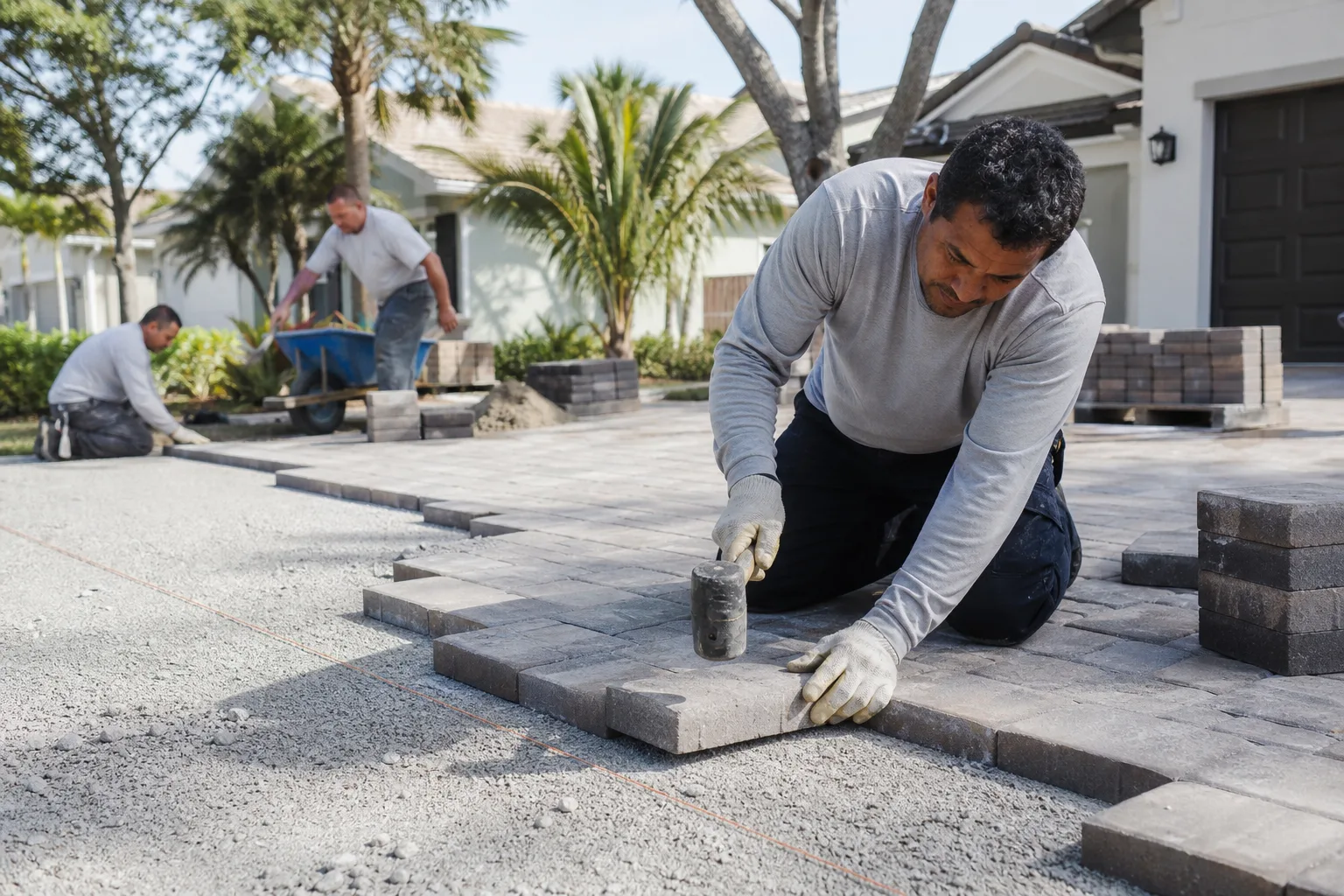
DIY on a paver driveway in Paradise is not all-or-nothing. You can safely do your own layout, pattern, and finishing, and if you’re careful and unhurried, that saves real money. You cannot safely skip base compaction, and you should not cut near a utility. The base layer is where DIY fails, the desert monsoon season is where it gets exposed, and Clark County permits apply whether you or a contractor does the work. If the equipment math and the redo risk tip you toward hiring it out, use the three questions in the vetting section and get a free estimate before you sign anything. Call (855) 596-7029 to schedule yours, or start with an overview of what we handle on our Barrett & Sons Construction Paradise home page. We also handle Fence Installation in Paradise if your project extends to the property line, and we carry premium brands on every trade we touch, from Belgard and Techo-Bloc on hardscape to GAF and CertainTeed on roofs.
Written by the team at Barrett & Sons Construction Paradise.