Last updated November 18, 2026
Free written scope consultation - allowances, timeline, and change-order rules on paper before a single trade is scheduled
The Complete Driveway & Pavers Guide for Paradise Homeowners
Most paver failures in the Las Vegas Valley happen six inches underground, not on the surface. The joints look fine, the color is still sharp, but the driveway rocks underfoot and holds water in all the wrong places. The cause is almost always the same: a base that was built for Midwest soil on top of Paradise’s caliche hardpan. This guide skips the brochure talk about paver patterns and gets into what actually determines whether a driveway in Paradise lasts 30 years or starts shifting in 18 months. You’ll learn the excavation depths that work here, the joint sands rated for 160°F ground, the Clark County permit rules, and the slope minimums that keep monsoon water moving away from your slab.
Quick Answer
A driveway paver installation in Paradise, NV typically runs $12 to $22 per square foot installed, and the base prep under it matters far more than the paver brand you choose. Caliche hardpan requires excavation 4 to 8 inches deeper than national installation guides call for, plus a specific aggregate gradation that locks together in desert heat. Skip that prep and even a premium Belgard or Techo-Bloc product will fail within a few seasons.
Styles & brands we work with
- Kitchen remodeling
- Bathroom remodeling
- Home additions & ADU
- Roofing
- Windows & doors
- Driveway & pavers
- Fence
Table of Contents
- Why Caliche Hardpan Changes Everything in Paradise
- What 160°F Surface Heat Does to Joint Sand
- The Clark County Driveway Approach Permit
- Concrete Pavers vs. Tumbled Stone in High-UV Desert
- Slope and Pattern Minimums for Monsoon Season
- The 8-Step Installation Sequence That Works Here
- What Pavers Cost in Paradise: A Line-Item Breakdown
- Maintaining a Paradise Paver Driveway
Why Caliche Hardpan Changes Everything in Paradise
Caliche is a calcium carbonate layer that forms in desert soils when dissolved limestone and minerals get pulled upward by evaporation and cement together underground. In Paradise and across the Las Vegas Valley, that layer can sit anywhere from a few inches to several feet down, and it’s about as soft as a parking block. A sub-base that sits directly on caliche with no drainage path traps water in the pockets between the hardpan and the aggregate. When it freezes (yes, Paradise gets a handful of nights below freezing each winter) or when the water can’t drain, the base pumps and the surface pavers lift.
National installation guides assume a soil profile with natural drainage and moderate compaction. They recommend 4 inches of compacted aggregate base for a residential driveway. In Paradise, we excavate to 8 to 12 inches, depending on what the caliche inspection shows, and we use a graded crushed aggregate that compacts to 95% Proctor density rather than a uniform rock that just sits there. The extra excavation is the difference between a driveway that lasts three decades and one that starts rocking by year two.
If you’re planning a driveway as part of a larger outdoor project, the same base prep logic applies to walkways, patio slabs, and retaining walls. Read our Driveway & Pavers in Paradise page for how we scope those jobs together.
How We Test for Caliche Before Quoting
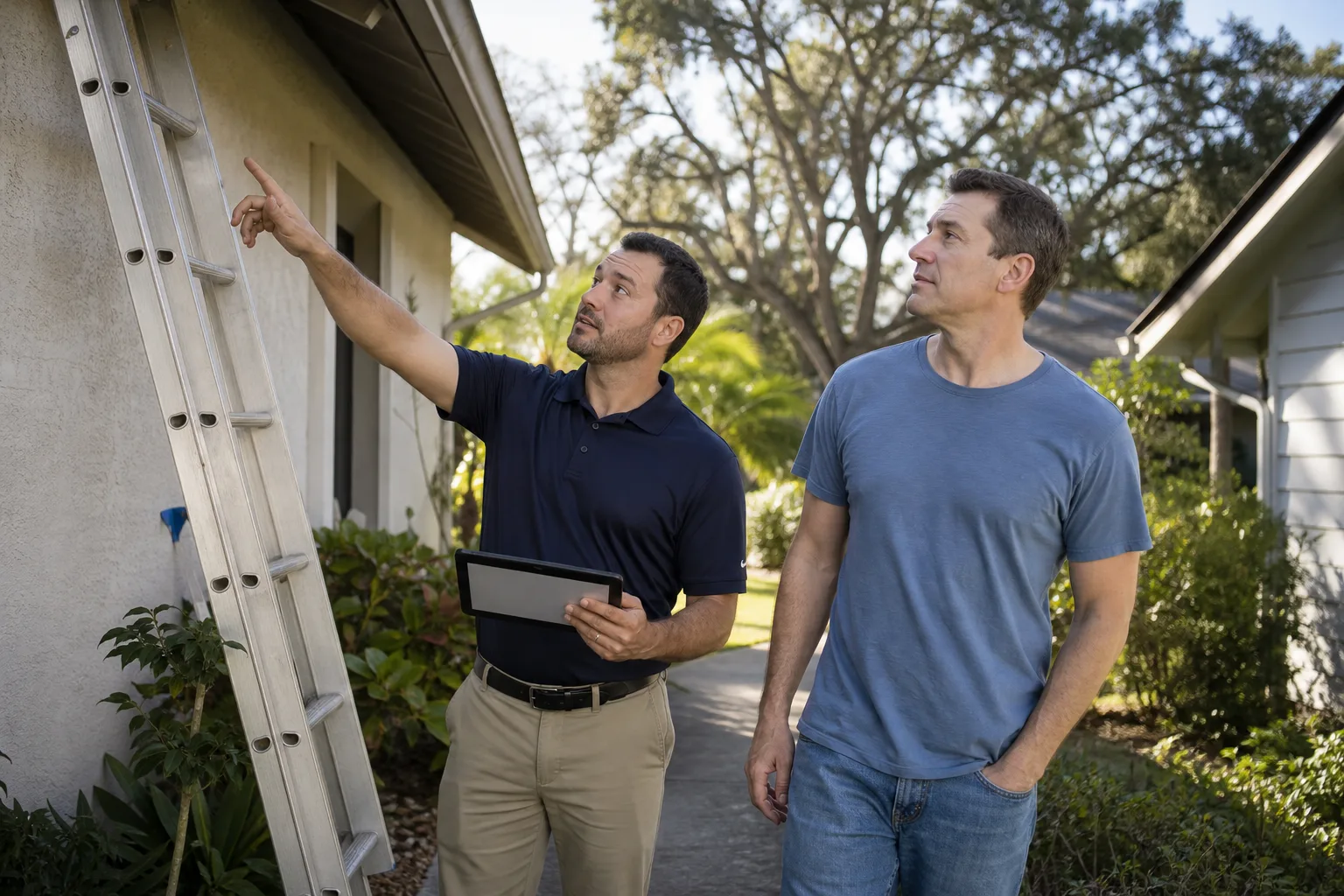
- We probe the proposed driveway footprint with a steel rod every 10 feet to locate the depth of hardpan.
- We excavate a test pit to confirm the soil profile and photograph it for the written scope.
- We measure the drainage slope of the site and confirm where water needs to go before we spec any aggregate.
- We write the excavation depth, aggregate type, and compaction spec into the estimate so there’s no argument later.
What 160°F Surface Heat Does to Joint Sand
Pavers in direct summer sun in Paradise reach surface temperatures of 160°F or higher. That’s hot enough to soften many standard polymeric sands to the point where they lose their binding strength and wash out in the first real rain. The joint sand is what locks the pavers together laterally and keeps water from getting under the surface. If the sand fails, the driveway opens up.
Not every polymeric sand on the shelf at a big-box store is rated for Mojave conditions. The ones that hold up have a few things in common: they cure through a chemical activator rather than moisture alone, they carry a manufacturer temperature rating that specifically lists a high-heat threshold, and the installer follows the manufacturer’s cure time to the hour. Ask your contractor which joint sand they plan to use and what the manufacturer’s high-temperature rating is. If they can’t answer that from memory, that’s a problem.
We use polymeric sands from premium manufacturers with published high-heat specs, and we schedule the installation season to avoid the riskiest weeks. Our technicians have up to 28 years of experience installing pavers in this climate, and every job gets a written scope that names the sand, the aggregate, and the compaction spec before work starts.
Signs Your Joint Sand Is Failing
- Wide gaps opening between pavers after a summer, especially in full-sun areas.
- Sand dust appearing on the surface on windy days.
- Paver edges chipping or spalling near the joints.
- Water pooling in the joints after even a light rain.
- Loose pavers that rock when you walk on them.
The Clark County Driveway Approach Permit
Clark County requires a driveway approach permit whenever you build or widen the connection between your property and the public right-of-way. That includes new driveway installations on lots that didn’t have one, widening an existing approach, and moving a driveway to a different location on the frontage. Residential driveway work that stays entirely inside the property line does not need the approach permit, but it may still need a grading permit if the elevation change is significant enough to affect drainage onto a neighboring lot.
Skipping the approach permit is one of the most common mistakes we see on Paradise jobs where the prior contractor told the homeowner “permits are optional for pavers.” What actually happens when the permit is skipped: the county can require the homeowner to tear out and re-do the approach if it doesn’t meet the sight-distance or drainage specs at the time of a future sale or inspection. It’s a costly five-figure fix that arrives years later.
When we quote a paver driveway in Paradise, the permit cost gets written into the scope up front. We pull the permit and we’re there for the inspection. As our crews say, the permit inspector works for you, not for us – that’s why we like him.
Concrete Pavers vs. Tumbled Stone in High-UV Desert
Concrete pavers outperform tumbled natural stone in Paradise’s UV environment for one practical reason: concrete pavers are engineered with integral UV-stable pigments and can carry manufacturer fade warranties that natural stone can’t offer by definition. Tumbled stone fades on its own schedule because it’s porous and the surface loses its finish in direct sun. Concrete pavers hold their color when properly manufactured and installed, and the fade warranty can be compared apples-to-apples.
When you compare fade warranties between brands, look at four things:
- Length in years – 10, 15, or lifetime. Note whether it’s pro-rated or full replacement.
- What’s covered – pigment fading only, or cracking, chipping, and structural failure too.
- The fade threshold – how much color shift counts as a warranty event (some brands say “visible fade,” which is hard to prove; look for a specific Delta E color measurement).
- Exclusions – de-icing salt, pressure-washing above a PSI threshold, and improper installation are common exclusions.
We install Belgard and Techo-Bloc because both publish their warranty terms clearly and stand behind them. You can look up the spec sheets yourself before you sign anything, and we include the manufacturer spec sheet in your project documentation.
Slope and Pattern Minimums for Monsoon Season
Paradise sits in a climate that gets almost no rain for nine months and then gets a heavy share of flash-flood monsoon storms between July and September. In 30 to 60 minutes, we can see a half-inch to an inch and a half of rain, and it has nowhere to go but downhill fast. A driveway that drains correctly in dry weather can turn into a water channel against the foundation if the slope spec was off by half a percent.
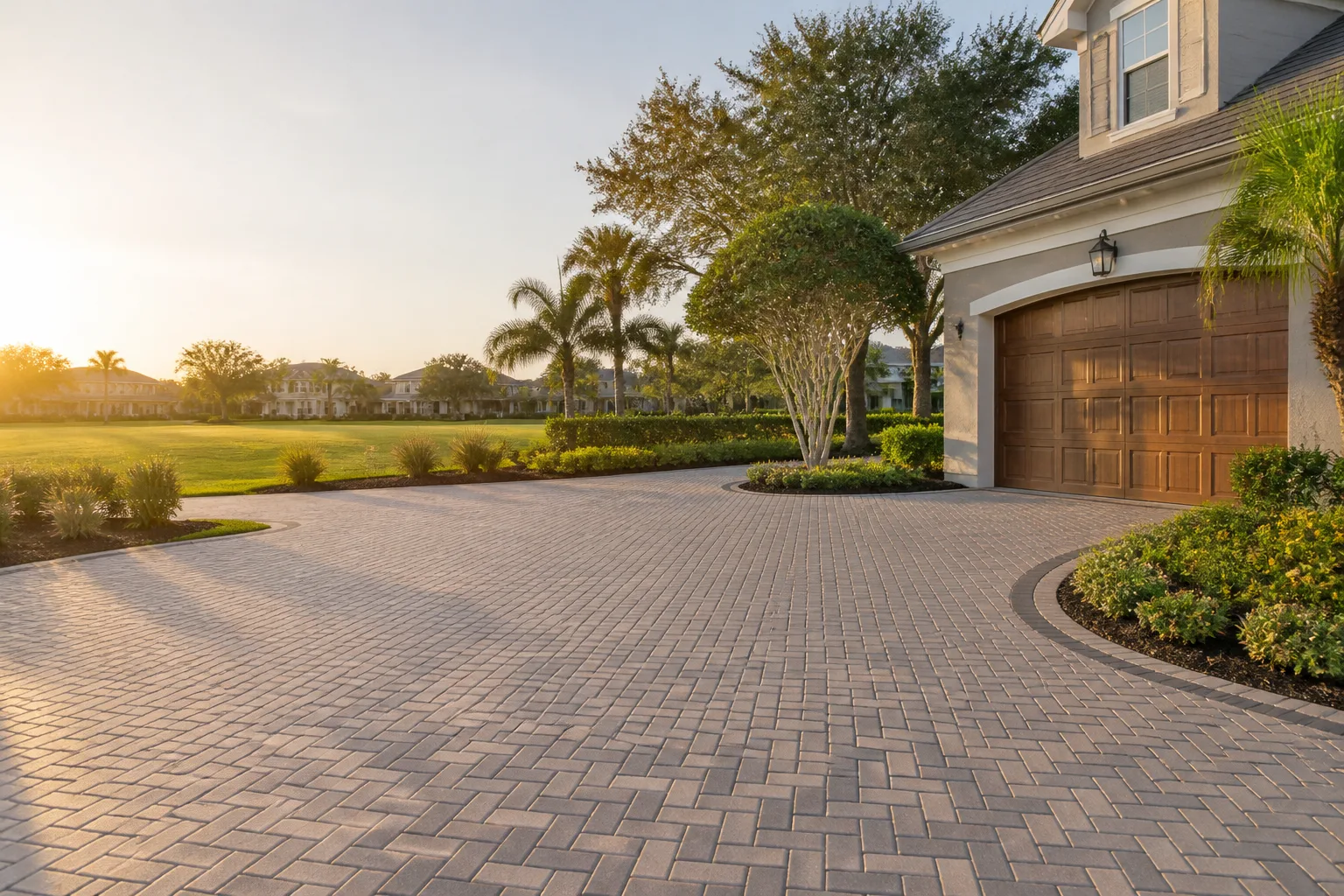
The minimum spec for a paver driveway surface is 1.5% slope away from the home (roughly 1/8 inch per foot, but no less than 1/4 inch per foot on tighter runs), increasing to 2% in areas where the driveway meets a garage slab or a side yard that drains toward a foundation. Cross-slope toward a landscape swale or dry well is preferred over cross-slope toward a neighbor’s property. Pattern choice affects how water moves across the surface: a running bond laid perpendicular to the slope drains cleaner than a herringbone laid parallel to the flow, because the herringbone pattern creates small pockets that hold water.
If you have a fence installation in Paradise planned for the same yard, coordinating it with the driveway drainage plan is worth doing. Fence footings can act as a water barrier that backs water up against the house, and a good install plan accounts for it.
The 8-Step Installation Sequence That Works Here
This is the sequence we follow on every driveway job in Paradise, and the order matters. Every step gets inspected before we move to the next one.
- Permit and utility locate. Clark County approach permit pulled if the driveway touches the right-of-way. 811 called to locate all utilities.
- Excavate to caliche depth. Remove 8 to 12 inches of soil until we reach firm material. Haul off spoils to the county-approved facility.
- Compact the subgrade. Proof-roll the exposed subgrade with compaction equipment to reveal any soft spots before we build on it.
- Lay geotextile fabric. Separates the native soil from the aggregate base and prevents migration of fines that would destabilize the base over time.
- Install and compact the aggregate base. Two to three lifts of graded crushed aggregate, each compacted to 95% Proctor density. We test lift by lift.
- Fine-grade and set the edge restraint. Final grade for slope and crown. Edge restraints spiked into the base hold the pattern laterally.
- Set the pavers and cut the perimeter. Lay the pattern from a chalk line, cut perimeter pavers wet with a diamond saw for clean edges.
- Compact, sweep joint sand, cure. Plate compact over the field, sweep polymeric sand into the joints, activate per manufacturer spec, and allow full cure time before traffic.
Every price change along the way arrives as a written change order before we touch the job. If the caliche turns out deeper than the test pit indicated, you get a written change order with the adjusted scope, not a surprise invoice at the end.
What Pavers Cost in Paradise: A Line-Item Breakdown
Pricing on a paver driveway in Paradise breaks into five main lines: excavation, base prep, materials, installation labor, and permit. If any of those lines are missing from a quote, ask why. The table below reflects typical ranges for a standard 2-car driveway of roughly 500 square feet in the Paradise market.
| Line Item | Typical Range | Notes |
|---|---|---|
| Excavation and haul-off | $1,200 – $2,400 | Higher when caliche reaches the surface |
| Aggregate base and compaction | $1,800 – $3,200 | Includes geotextile and lift compaction |
| Concrete pavers (material) | $2,500 – $5,000 | Belgard or Techo-Bloc standard lines |
| Installation labor | $2,000 – $4,200 | Larger for complex patterns or curves |
| Clark County approach permit | $150 – $450 | Only when the driveway meets right-of-way |
| Joint sand and finishing | $300 – $600 | Polymeric, high-temp rated |
Total installed cost in Paradise lands between $6,000 and $15,000 for a 500-square-foot driveway, or roughly $12 to $22 per square foot depending on paver line, depth of excavation, and pattern complexity. Quotes that come in well under $12 per square foot almost always cut the base prep, which is exactly where the failure will show up in 2 to 3 years.
If the driveway leads into a larger project like a Home Additions & ADU in Paradise, we scope the two together so there’s no tear-out and re-do. We’ve also worked on ADU-adjacent driveways using panelized systems from Abodu and Cover where the schedule required it, and those come with their own access-load specs you’ll want to plan for before we pour the base.
Maintaining a Paradise Paver Driveway
A paver driveway in Paradise needs two maintenance calls a year: once after monsoon season and once in early spring. The rest is normal care. Here’s what to check and when.
- After monsoon season: Walk the full perimeter and check for joint sand washout. Any joint more than 1/8 inch deep empty needs topping off with fresh polymeric sand.
- Early spring: Inspect pavers for frost heave (small lifts at the joints) after our handful of freezing nights. Any heave more than 1/16 inch warrants a look.
- Summer: Skip pressure washing. High-pressure water displaces joint sand and voids many manufacturer warranties. Use a hose, a soft-bristle broom, and a mild detergent.
- Fall: Clear any leaf litter from the drainage path and swales before the winter rains start.
- Never: De-icing salts. They void the fade warranty on most concrete pavers, and they’re hard on the surface anyway.
If you notice rocking pavers, water pooling against the house, or sand accumulating on the surface in a low spot, that’s a base failure signal and it’s worth an inspection before it spreads. Catching it in month six is far cheaper than catching it in year two.
Common Mistakes to Avoid
- Skipping the caliche depth check. A contractor who quotes a flat 4-inch base without probing the soil is quoting a driveway that will fail. Every Paradise job needs the probe first.
- Using standard polymeric sand. Big-box polymeric sand is not high-temp rated. It will not survive a Paradise summer in a full-sun exposure.
- Not pulling the approach permit. When a future buyer’s inspector finds an unpermitted driveway approach, the fix is on you.
- Laying a herringbone pattern perpendicular to a steep cross-slope. It slows drainage and holds water at the joints. Running bond parallel to the flow works better on this grade.
- Pressure-washing at 3,000+ PSI. It voids the paver warranty and displaces joint sand in one pass.
- Choosing the paver after the install price is agreed. The paver line drives a quarter of the cost. Lock the brand and model before you sign.
- Accepting a verbal change order. Every adjustment should be in writing before work moves. As we tell our neighbors, the allowance that isn’t on paper is a surprise waiting for a date.
See the difference
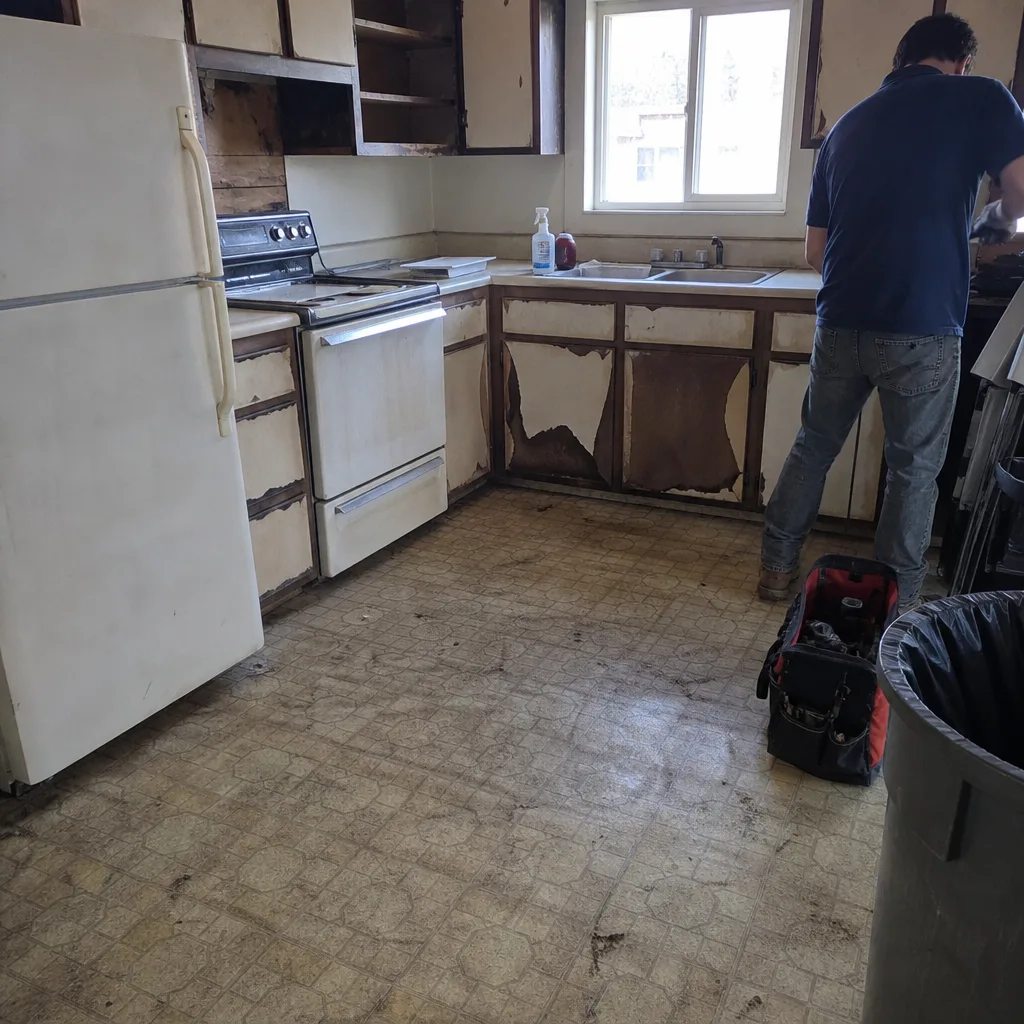 Before
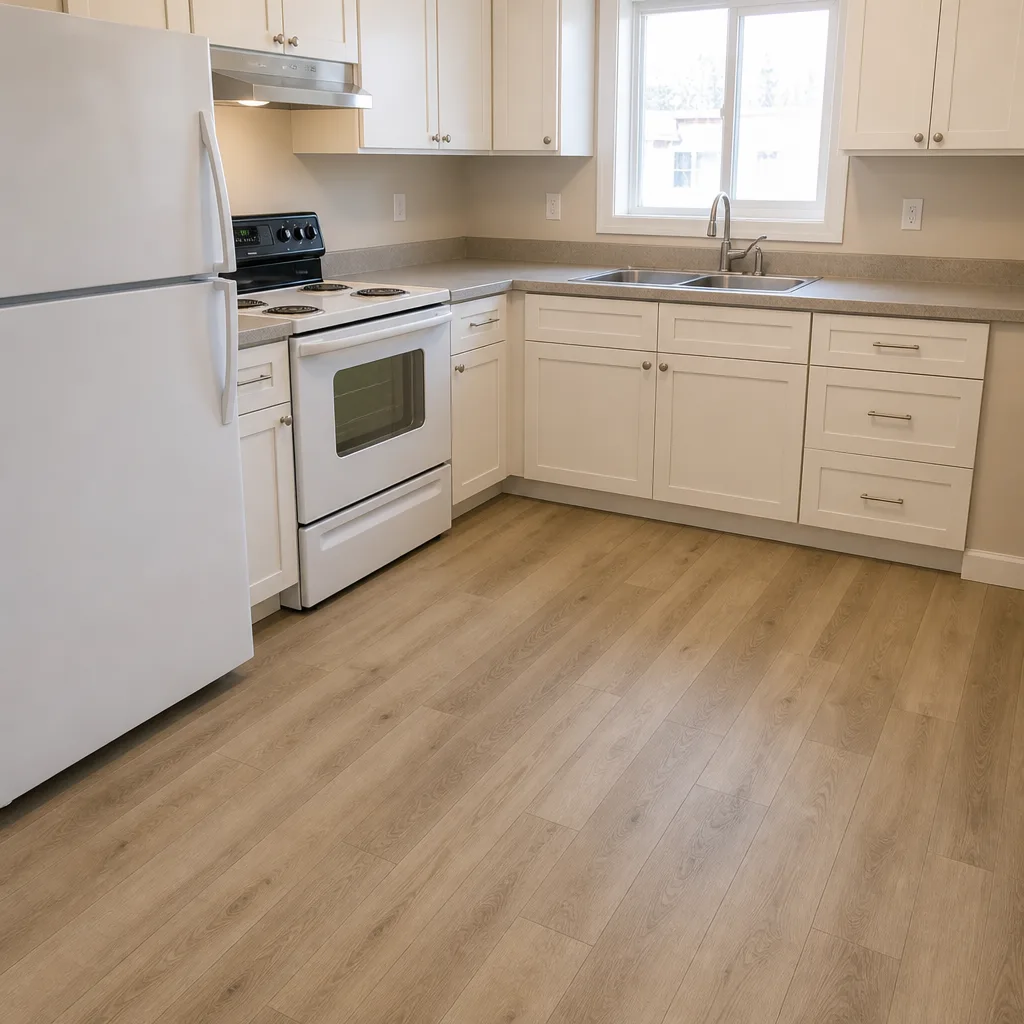 After
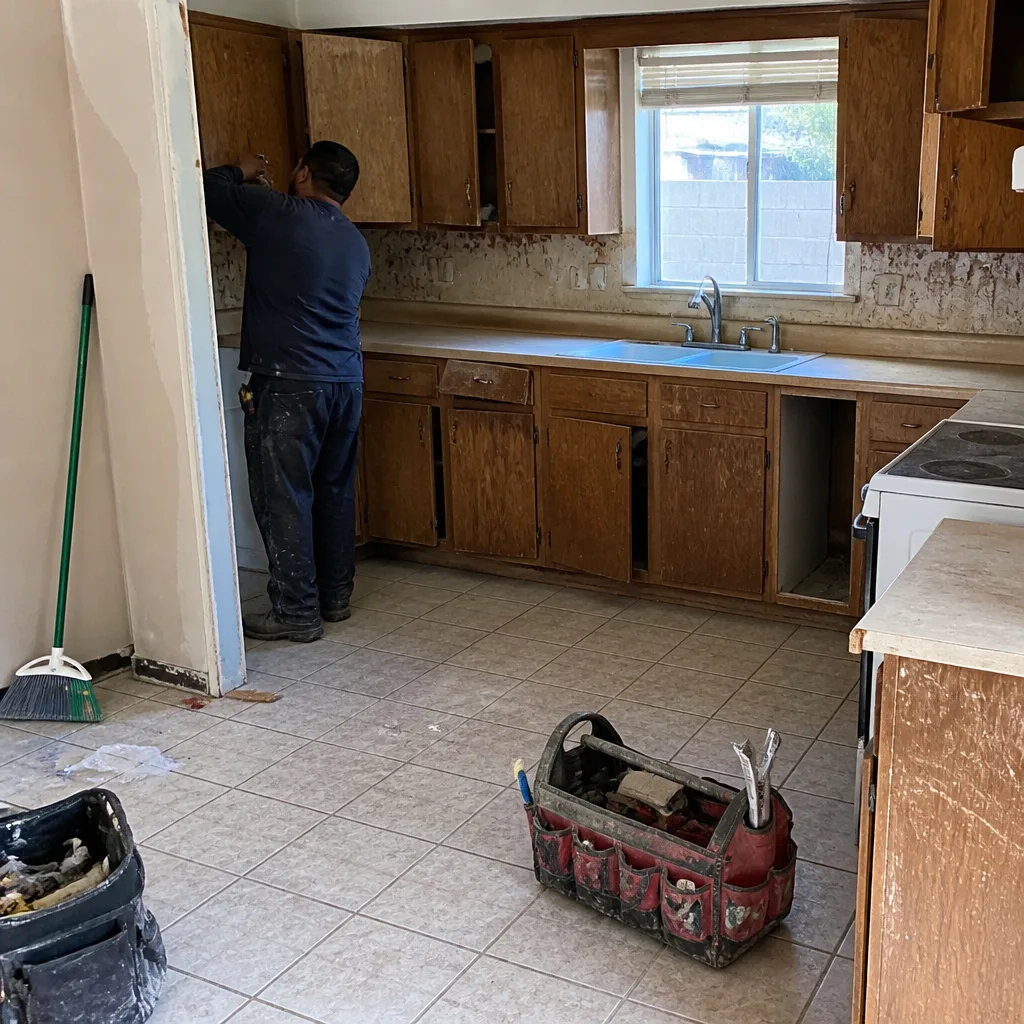 Before
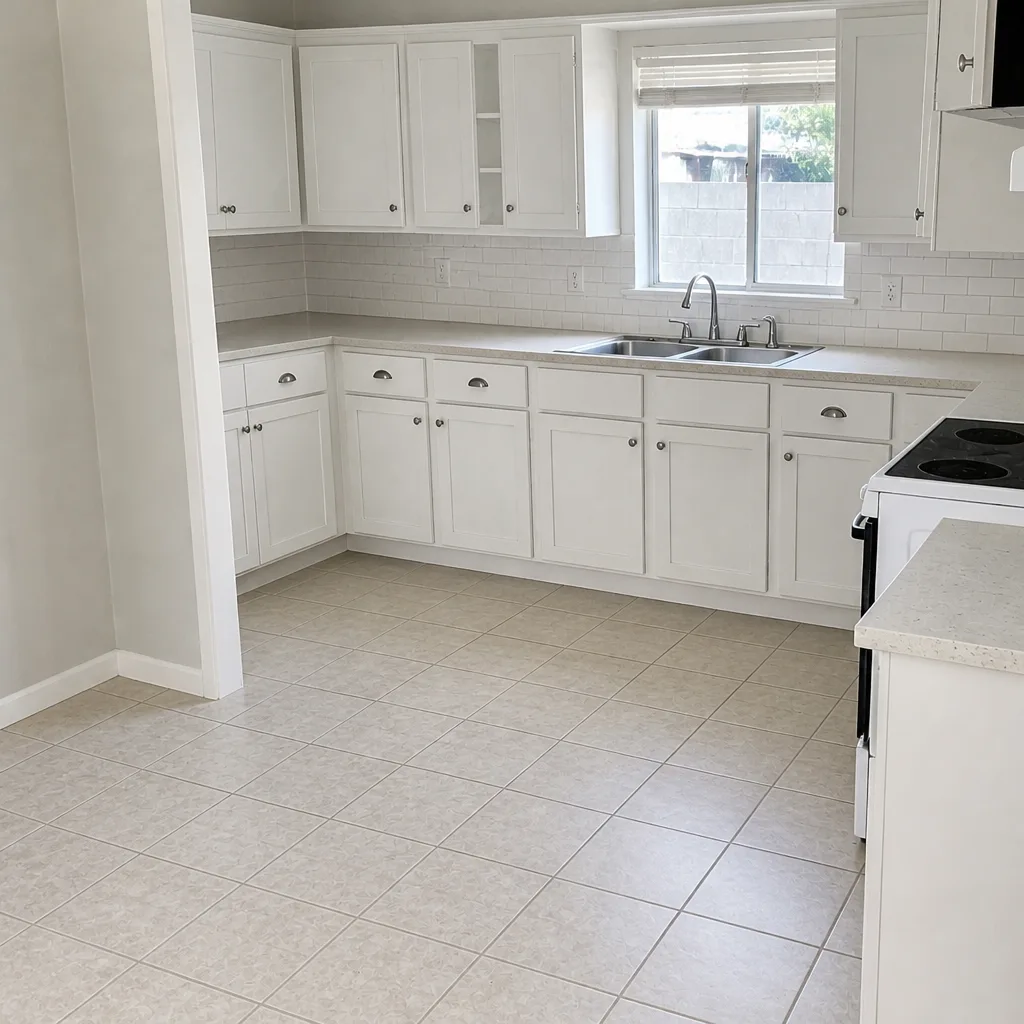 After
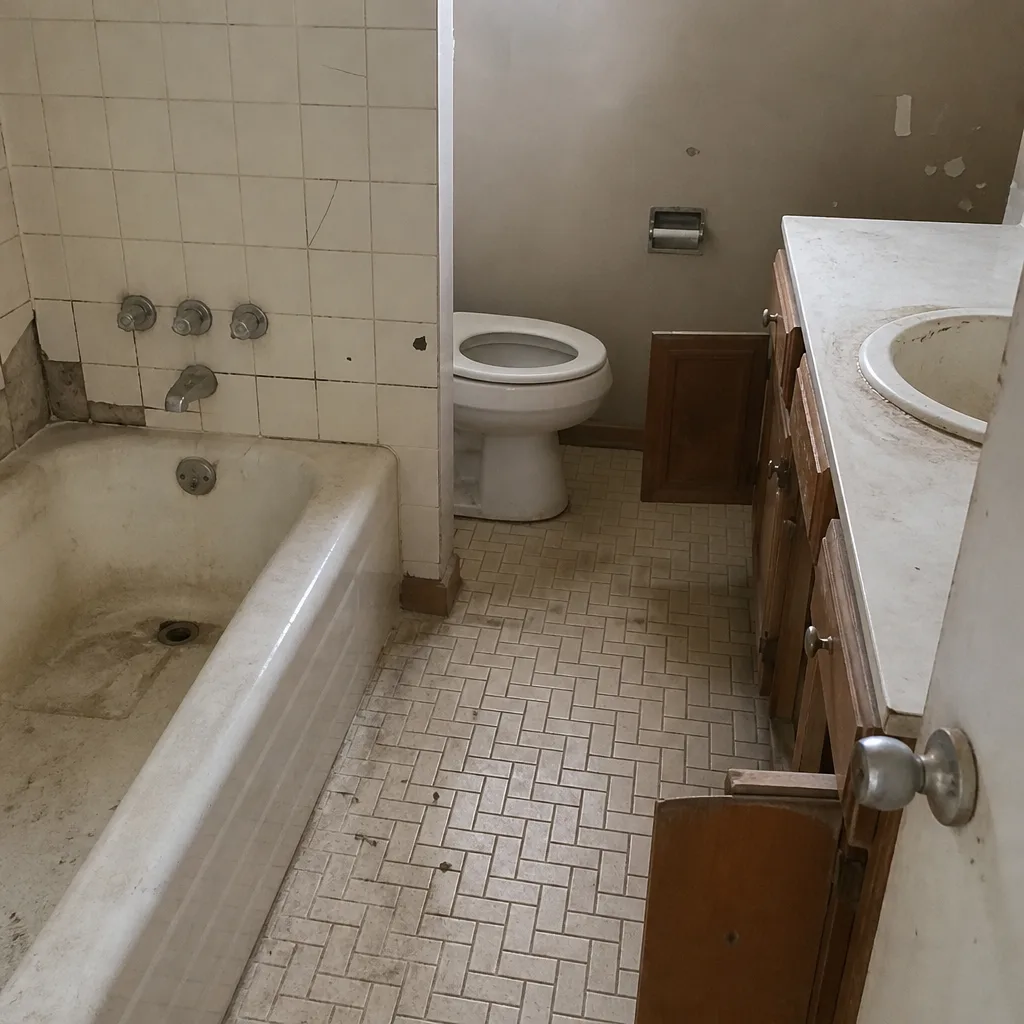 Before
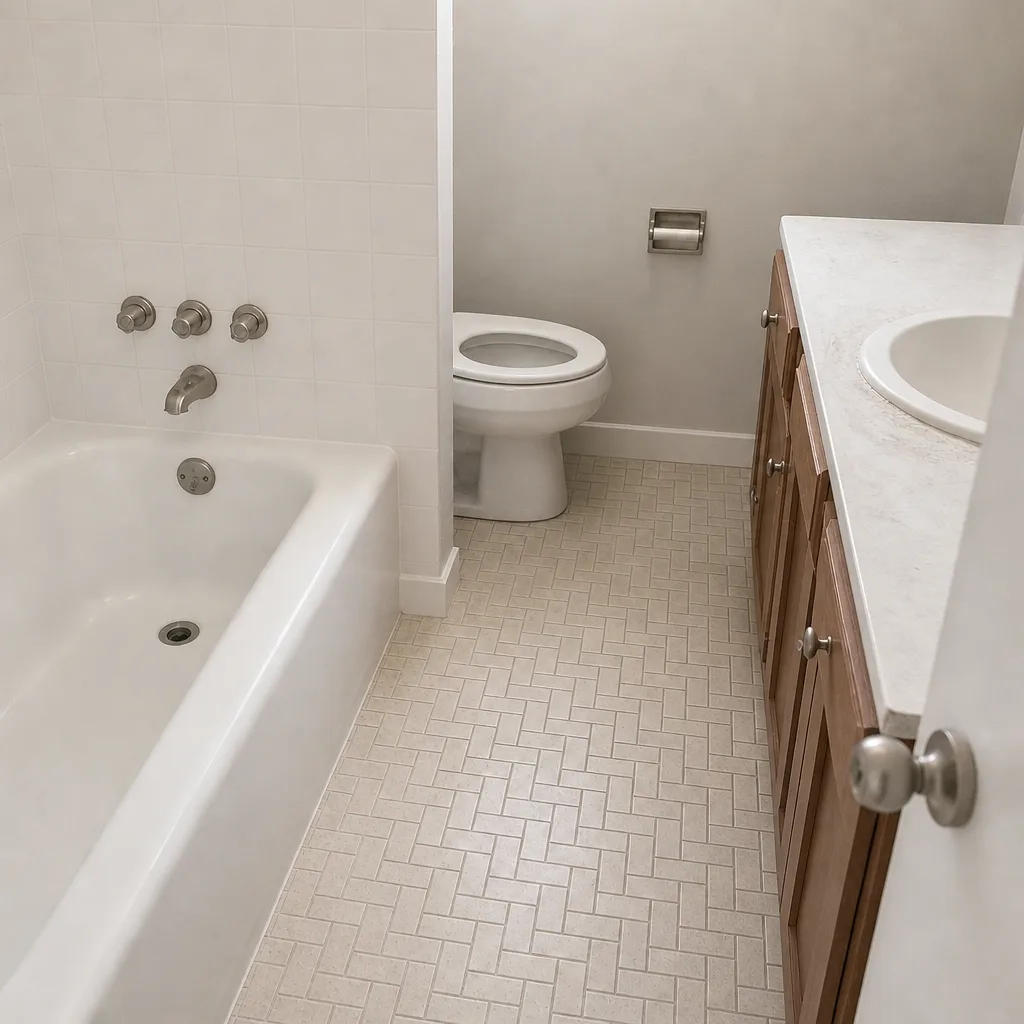 After
When to Call a Professional
Call us when the driveway is rocking underfoot, when joints are opening wider than 1/8 inch, when water is pooling against the house after a storm, or when you’re planning a fresh install and want the base done right the first time. Anything involving the caliche excavation, the aggregate base compaction, and the permit pull is work that needs a licensed, insured crew who has done it in this soil before. It’s also work that can turn into a torn-open hole if the base spec was wrong. In Paradise, we offer free estimates with a written scope that names the aggregate, the joint sand, and the permit line. Call (855) 596-7029 and we’ll come out, probe the soil, and quote you an honest number before any shovels hit the ground.
Frequently Asked Questions
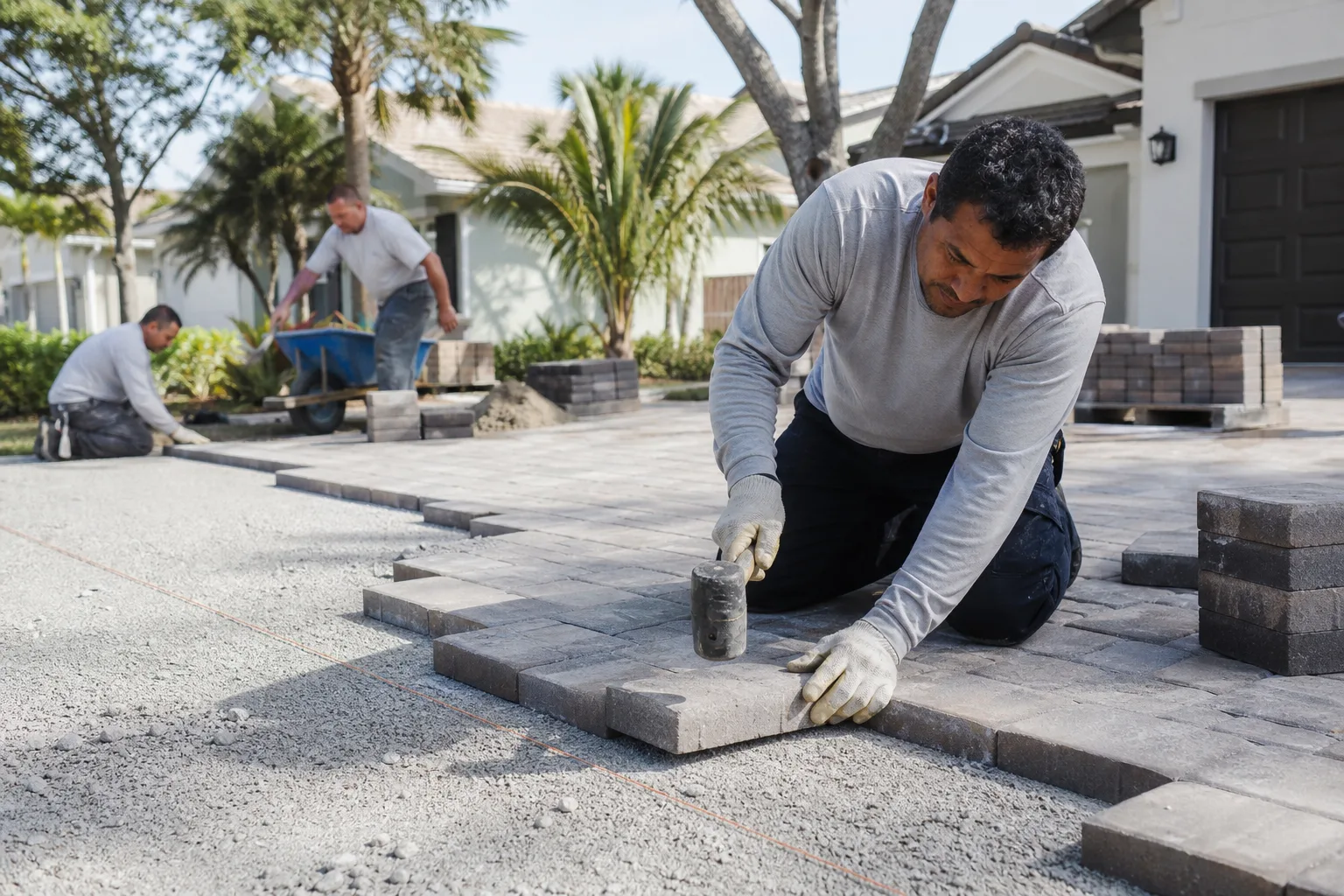
A 500-square-foot paver driveway in Paradise typically costs $6,000 to $15,000 installed, or $12 to $22 per square foot. The range depends mostly on how deep the caliche runs on your lot and which paver line you pick. Call (855) 596-7029 for an exact quote after a site visit, and the estimate is free.
Yes, when your driveway connects to the public right-of-way, Clark County requires a driveway approach permit. Work that stays entirely inside your lot may still need a grading permit if the elevation change affects drainage to a neighbor. We pull the permit and stand for the inspection on every eligible job.
Most paver failures here trace back to base prep on caliche soil, not the pavers themselves. A shallow 4-inch base on top of hardpan traps water, and the driveway starts rocking in 18 to 24 months. Excavate to 8 to 12 inches, use graded aggregate compacted to 95% Proctor density, and the same pavers last 30 years.
Only polymeric sands with a published high-heat rating, also called Mojave-rated or 160°F-rated, will hold through a Paradise summer. Standard polymeric sand softens and washes out. Ask your contractor which sand brand and high-temp rating they plan to use, and get it in writing.
Not without a written change order. If we discover caliche deeper than the test pit showed, you receive a written change order with the adjusted scope and adjusted price before any additional work happens. No surprise invoices at the end. Call (855) 596-7029 to schedule your free estimate.
Concrete pavers outperform natural tumbled stone in Paradise because they carry integral UV-stable pigments and a manufacturer fade warranty you can compare apples-to-apples. We install Belgard and Techo-Bloc, both of which publish their fade warranty terms clearly. Natural tumbled stone fades on its own schedule and carries no comparable warranty.
The Bottom Line
The paver brand matters less than what’s sitting under it. In Paradise, caliche hardpan demands excavation depth, graded aggregate, and compaction that national guides don’t account for, and joint sand that’s actually rated for 160°F ground. Add the Clark County approach permit, the fade warranty you can compare, and the slope minimums that keep monsoon water moving away from the slab, and you have a driveway that lasts 30 years instead of 18 months. Barrett & Sons Construction Paradise is proud to serve Paradise homeowners with written scopes, permits pulled, and the 90-Day Done Right Promise on every job. For a free estimate, call (855) 596-7029.
Written by the team at Barrett & Sons Construction Paradise.